First Time in Thailand — Everything You Need to Know
ATM fees, transport scams, visa rules, when to go, and what to actually do on your first trip. Lessons from a decade of mistakes so you don't have to make them.
First Time in Thailand — Everything You Need to Know
I've been going to Thailand for over a decade. My first trip I got destroyed by ATM fees, paid triple for a tuk-tuk, and showed up in the hottest month of the year. Here's everything I wish someone had told me.
Money and ATM Fees
Nobody tells you this: Thai ATMs hit you with a ฿220 ($6.20) fee on every single withdrawal, on top of whatever your home bank charges. I've watched tourists pull out ฿2,000 ($56) at a time and pay ฿220 for the privilege. That's an 11% fee.
So what do I do? I find a Bangkok Bank or Krungsri Bank ATM and pull out the maximum — usually ฿30,000 ($840) — in one go. Yes, you'll still pay that ฿220 fee, but now it's less than 1% of your withdrawal. Makes a huge difference over a month-long trip.
Before you leave home, call your bank and ask about their international withdrawal fees. Some banks reimburse ATM fees — Charles Schwab does this, and so does Fidelity. If your bank charges ฿150-300 ($4-8) per withdrawal on their end PLUS the Thai ฿220 fee, you're bleeding money. Open a travel-friendly account before you go.
One more thing: always decline the ATM's currency conversion offer. The screen will ask if you want to be charged in your home currency. Always say no. Choose to be charged in Thai Baht. The conversion rate they offer is garbage — usually 5-7% worse than the actual rate. I learned this the expensive way in 2015.
For budget planning and tracking your spending in Thailand, I use baht-wise.com to keep everything organized. Helps me figure out if I'm on track or if I need to eat more street food and fewer restaurant meals.
Transport (Grab, BTS, Songthaew)
Transport scams are where first-timers get overcharged. I'm talking ฿1,000 ($28) taxi rides that should cost ฿150 ($4.20). Here's how to not be that person.
Grab Is Your Best Friend
Download Grab before you land. It's like Uber but actually works in Thailand. The price is set before you get in the car, the driver can't "forget" to turn on the meter, and you're not negotiating in broken Thai at 2am. A ride from Suvarnabhumi Airport to Khao San Road costs ฿350-450 ($10-13) on Grab. The airport taxi mafia will try to charge you ฿800-1,200 ($22-34) for the same trip.
If you must take a metered taxi, make sure they actually turn the meter on before you start moving. I've had drivers "forget" dozens of times. If they refuse the meter, get out. There's another taxi 30 seconds away.
BTS and MRT Are Cheap
Bangkok's elevated train (BTS) and subway (MRT) are air-conditioned, fast, and cost ฿16-59 ($0.45-1.65) per trip. Compare that to sitting in traffic in a taxi paying ฿100+ ($2.80). Get a Rabbit Card for the BTS — you can top it up and just tap to enter. Saves you from buying tickets every single time.
Songthaews and Tuk-Tuks Need Negotiation
In places like Chiang Mai or the islands, you'll see songthaews (shared pickup trucks) and tuk-tuks everywhere. Negotiate the price BEFORE you get in. I usually ask a local or hotel staff what the going rate is first. A tuk-tuk ride in Chiang Mai should be ฿60-100 ($1.70-2.80) for short distances. If they quote ฿300 ($8.40), laugh and walk away. They'll chase you down with a better price.
Songthaews are cheaper — usually ฿20-40 ($0.55-1.10) if you're going along their regular route. Just wave one down, tell them where you're going, and they'll nod if they're headed that way.
🚂Visa and Entry
The visa situation confuses everyone, so let me make this really simple. If you're from the US, UK, Canada, Australia, or most European countries, you get a 60-day visa exemption stamp when you land. Free. No application needed. Just show up with your passport and a return ticket.
Immigration sometimes asks to see proof of onward travel. Sometimes. I've entered Thailand probably 40 times and been asked maybe three times. But have a flight out booked within 60 days just in case. If you're planning to stay longer, you can extend that 60-day stamp for another 30 days at any immigration office for ฿1,900 ($53). The process takes about two hours and requires one passport photo and copies of your passport.
If you know you're staying more than 90 days, get a proper tourist visa from a Thai embassy before you leave home. It gives you 60 days on entry, extendable to 90 days total. Costs around $40-50 depending on your country. Way easier than doing visa runs.
Here's what trips people up: the visa exemption is per entry, not per year. You can technically enter multiple times, but if you're doing back-to-back entries (flying out and immediately flying back in), immigration will eventually question you. I've seen people denied entry after their fourth or fifth exemption in a year. Don't abuse it.
When to Go and When Not To
I'm going to save you from making my biggest mistake: showing up in April. April is the hottest month in Thailand. We're talking 40°C (104°F) with humidity that makes you feel like you're breathing through a wet towel. I spent my first trip hiding in air-conditioned malls because I couldn't handle being outside for more than 20 minutes. Terrible planning.
The best time to visit is November through February. The weather is cooler (25-30°C / 77-86°F), less humid, and it barely rains. This is high season, so prices are higher and beaches are more crowded, but it's high season for a reason — the weather is actually pleasant.
March through May is hot season. If you can handle serious heat, go for it. Prices drop a bit and there are fewer tourists, but you'll be sweating constantly. I only go during these months if I'm staying near the beach or spending most of my time in the mountains up north where it's cooler.
June through October is rainy season. Don't let that scare you off completely, though. It doesn't rain all day — usually you get a heavy downpour in the afternoon that lasts 1-2 hours, then it clears up. The countryside is green and beautiful, accommodation is cheaper, and the tourist spots are way less crowded. I actually prefer September and October for Chiang Mai. Just avoid the islands during this time because the seas get rough and some places shut down completely — our Thailand island guide covers the best time to visit each one.
One specific warning: Songkran (Thai New Year) happens mid-April. It's a massive water fight festival that takes over the entire country for 3-4 days. If you want to party and get soaked, it's incredible. If you want to actually see temples and relax, avoid April 13-15 entirely. Everything shuts down and you can't walk outside without getting drenched.
🎫What I'd Actually Do
Forget those "see all of Thailand in 10 days" itineraries. They're exhausting and you'll spend half your time on buses. Here's exactly what I'd do for a first trip — one week in Bangkok and Chiang Mai. This gives you city life, temples, food, and mountains without burning out.
Days 1-3: Bangkok
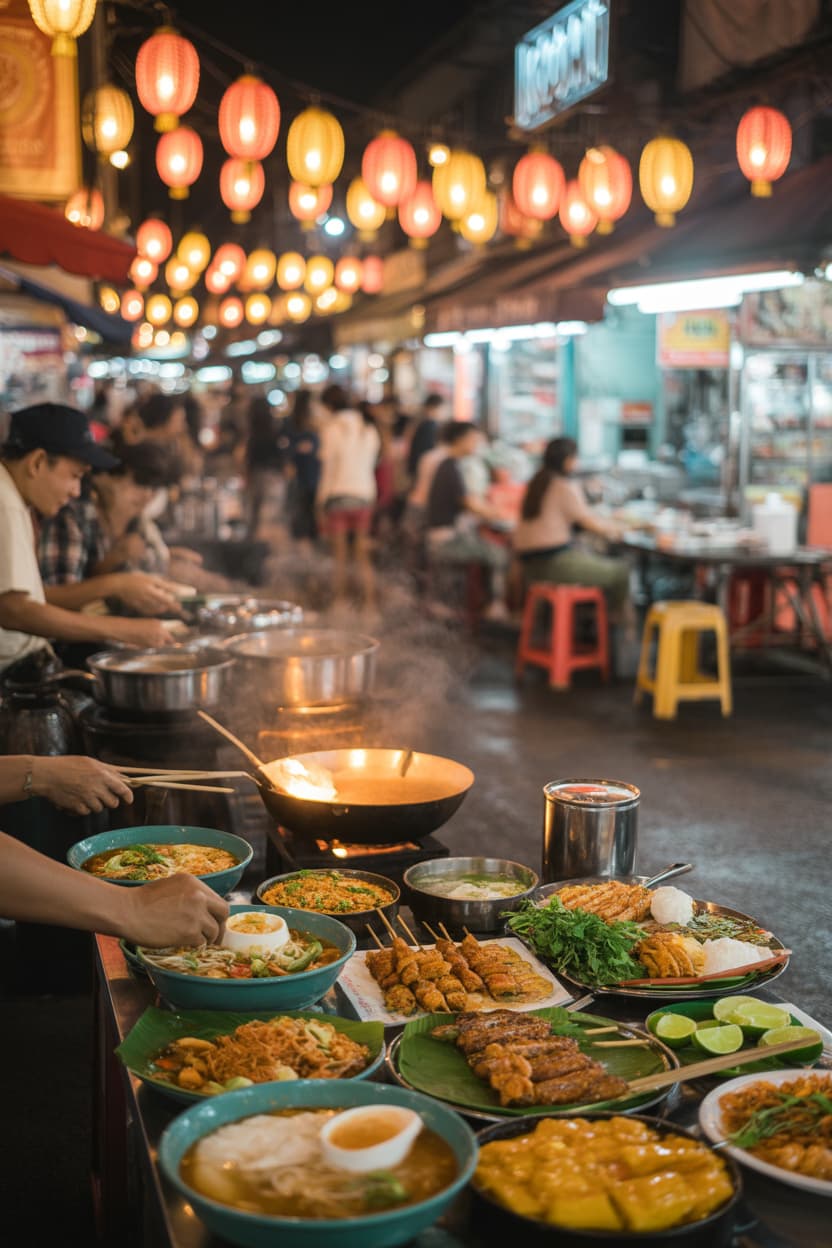
Land in Bangkok, take a Grab to your hotel in the Sukhumvit area (near BTS stations Nana or Asok). Spend your first afternoon walking around, getting used to the heat, and eating street food. I'd hit up Soi 38 night market for pad thai (฿60 / $1.70) and mango sticky rice (฿80 / $2.25).
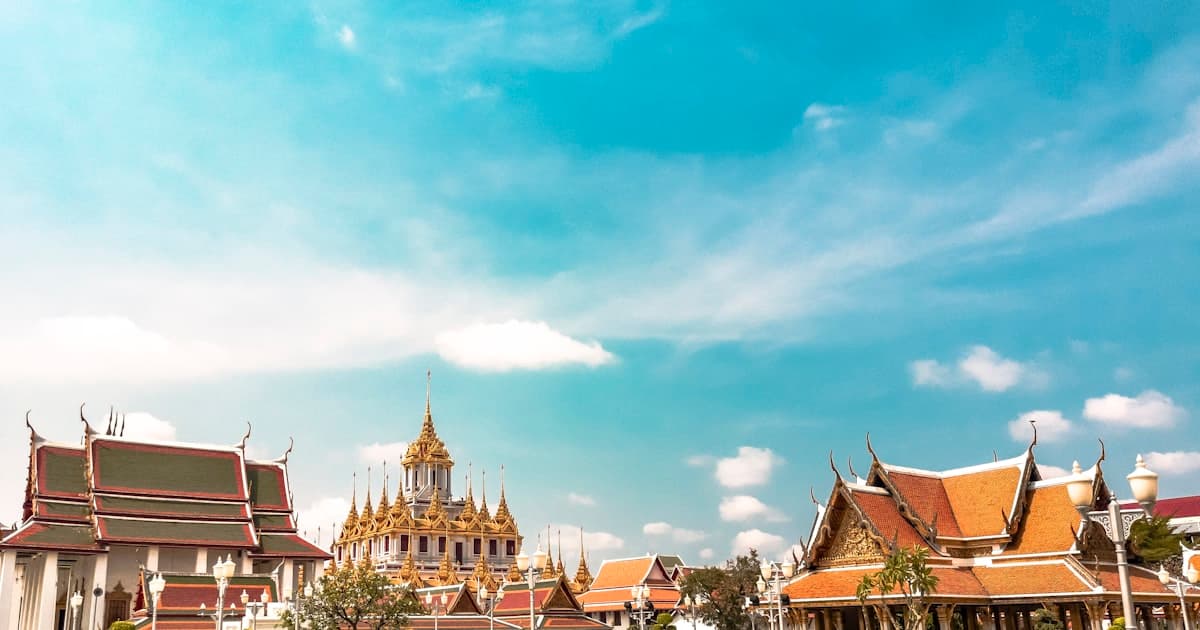
Day two, wake up early and take the BTS to Saphan Taksin, then grab a river boat to the Grand Palace (฿50 / $1.40 for the boat). Get to the Grand Palace right when it opens at 8:30am to avoid crowds. Entry is ฿500 ($14). Dress properly — shoulders and knees covered or they won't let you in. After the palace, walk to Wat Pho to see the giant reclining Buddha (฿200 / $5.60). Grab lunch at a street stall nearby for ฿50-80 ($1.40-2.25).
Day three, explore a different side of Bangkok. Take the BTS to Chatuchak Weekend Market if it's Saturday or Sunday — it's massive and overwhelming but amazing for cheap clothes and souvenirs. If it's a weekday, go to MBK Center for shopping or just wander around Siam Square. End your day at a rooftop bar — Octave at Marriott Sukhumvit is ฿300-400 ($8.40-11.20) for a cocktail with incredible views.
Days 4-7: Chiang Mai
Fly to Chiang Mai on day four — it's significantly cheaper than Bangkok for almost everything (here's our full Chiang Mai vs Bangkok cost breakdown). Flights are ฿1,000-2,500 ($28-70) depending on when you book. Stay in the Old City area — it's walkable and close to everything. Check into your hotel, then rent a scooter for ฿200-250 ($5.60-7) per day. Scooters feel sketchy at first but Chiang Mai traffic is way calmer than Bangkok, and it's the best way to explore.
Spend days five and six temple hopping. Wat Phra That Doi Suthep is the big one — it's up in the mountains and the views are stunning. Entry is ฿30 ($0.85). Drive your scooter up there early morning before it gets crowded. In the Old City, hit Wat Chedi Luang and Wat Phra Singh (฿40-50 / $1.10-1.40 each). Between temples, stop at cafes — Chiang Mai has incredible coffee culture. A good latte costs ฿80-120 ($2.25-3.40).
Planning your first trip? Use our budget calculator to see exactly what you'll spend, or let the trip planner build your full itinerary with real prices.
Planning a trip to Thailand?
Use our free budget calculator to see what things actually cost. Real prices from real trips — no BS, no guesswork.
Calculate Your Budget