Bangkok Street Food: What to Eat, What It Costs, and What to Skip
A decade of eating through Bangkok's streets — the dishes worth hunting down, what you'll actually spend per day, food safety rules that work, and the markets that deliver.
Bangkok Street Food: What to Eat, What It Costs, and What to Skip
I've been eating my way through Thailand's streets for over a decade now. The best food in Thailand comes from carts, stalls, and tiny shophouses where grandmas have been perfecting their recipes for 40 years. I've had Pad Thai that made me question every life decision that didn't involve moving to Bangkok permanently. I've also had some questionable experiences (we'll get to that), but that's part of the deal.
Key Dishes to Try in Thailand
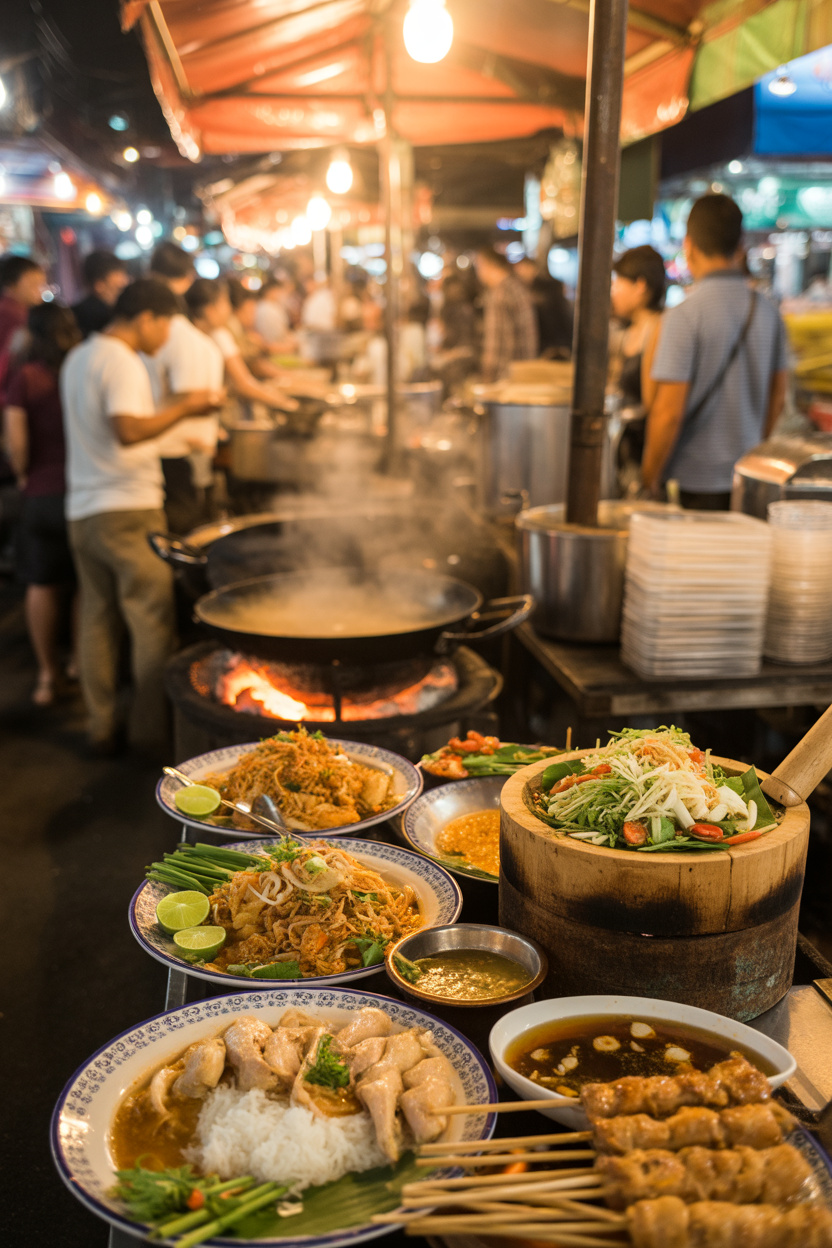
After ten years of systematically eating my way through Thailand, I've got some opinions. Pad Thai is the gateway drug—you've probably had it before, but trust me, you haven't really had it until you've eaten it from a street cart in Bangkok where they've been making it the same way since 1985. The version you'll find on Khao San Road? Skip it. Find the places where locals line up at 7 PM, and you'll know you're onto something good.
Som Tum (green papaya salad) will change your life if you can handle spicy food. I mean really spicy. The first time I ordered it, I confidently told the vendor to make it "Thai spicy" because I thought I was tough. I was not tough. I spent the next 20 minutes sweating through my shirt while simultaneously loving every bite. It's tangy, crunchy, and has this perfect balance of sweet, sour, salty, and holy-crap-that's-hot. Prices hover around ฿40-60 ($1.10-1.70), and it's usually made fresh right in front of you.
Then there's Khao Man Gai—poached chicken over rice cooked in chicken fat. Sounds simple, right? It is. But when it's done right, with that garlicky sauce and the perfect bowl of soup on the side, it's comfort food at its finest. You'll find this for about ฿50-70 ($1.40-2) at most stalls. I eat this at least twice a week when I'm in Bangkok because it's reliable, filling, and never disappoints.
Don't sleep on Moo Ping (grilled pork skewers) either. These things are everywhere, and for good reason. Sweet, smoky, slightly charred meat on a stick for ฿10 ($0.28) each. I usually grab five at a time because who are we kidding, one is never enough. The vendors marinate these overnight, and you can smell them grilling from a block away.
One honest caveat though: not all street food is created equal. I've had some truly mediocre Pad Thai from vendors who clearly don't care anymore. Look for the busy stalls—high turnover means fresh ingredients and food that's been perfected through repetition.
Best Street Food Markets in Bangkok
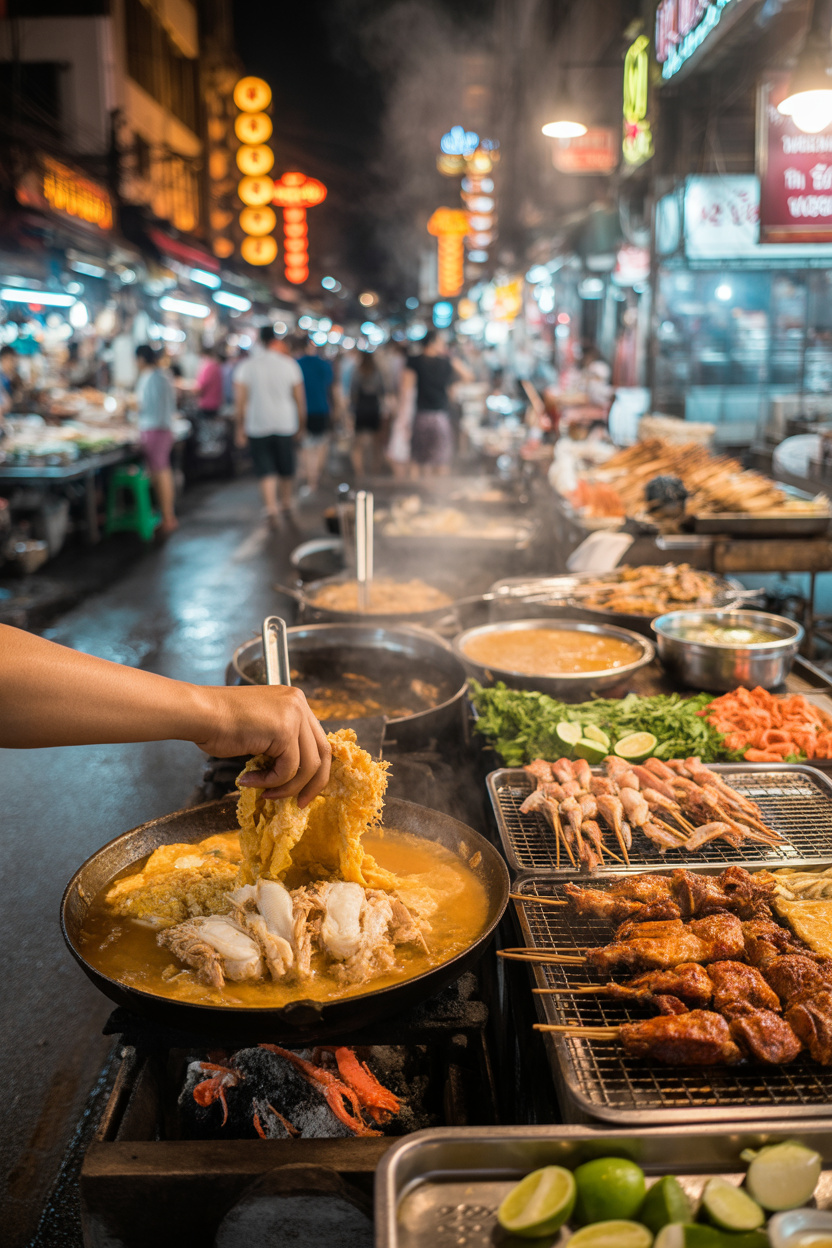
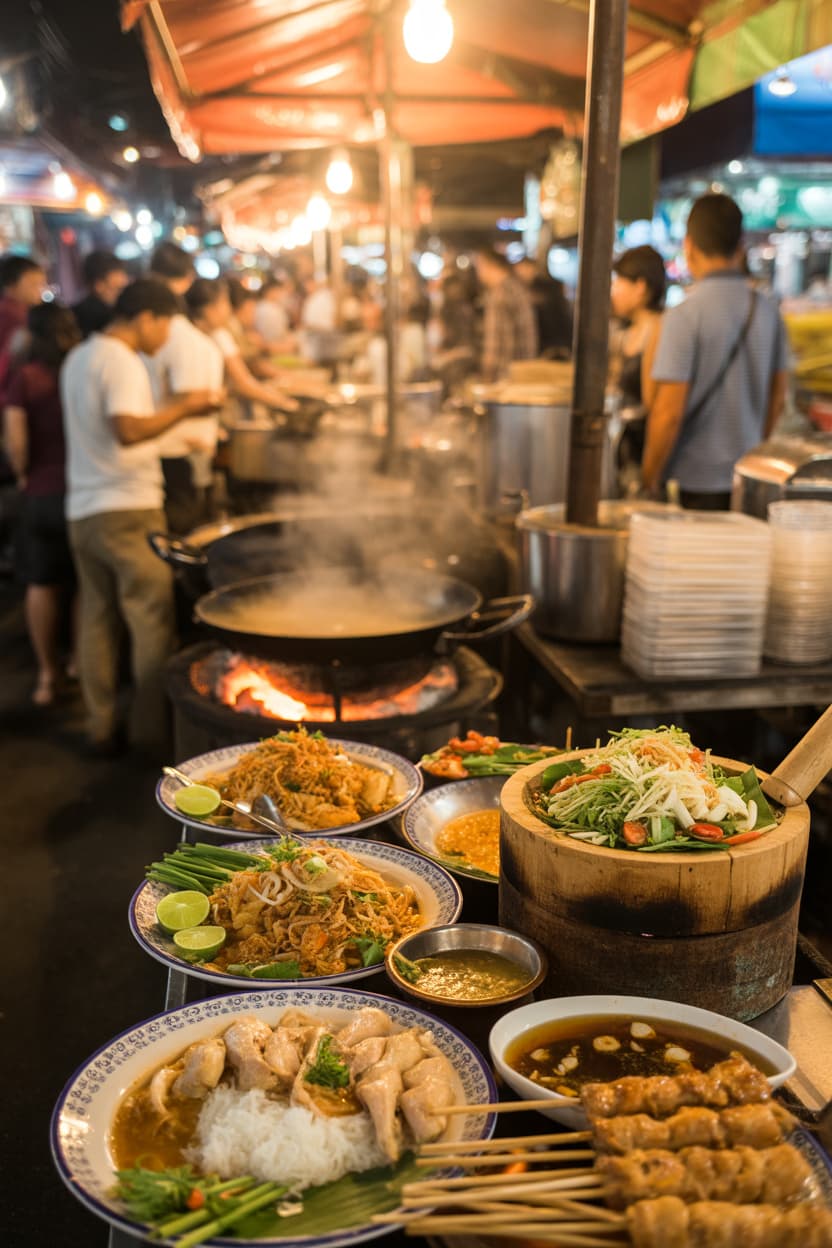
If you want to experience sensory overload in the best possible way, hit up Yaowarat (Chinatown) after dark. This place transforms into an absolute food circus once the sun goes down. I'm talking street after street of vendors selling everything from bird's nest soup to grilled squid to the best roast duck you'll ever taste. The energy here is insane—people shouting orders, woks firing, steam rising from countless pots. It's chaos, but it's beautiful chaos.
My go-to spot in Yaowarat is the corner near Wat Traimit where this one vendor makes crab omelets that are borderline obscene. Fluffy eggs stuffed with fresh crab meat for ฿150 ($4.20). Yeah, it's pricier than your average street food, but you're getting a plate piled high with actual crab. The downside? Yaowarat gets absolutely packed on weekends, and navigating through the crowds while carrying hot soup is an extreme sport.
Rot Fai Market (the Train Night Market) is where I take friends who want the full experience without the intensity of Chinatown. It's got this cool vintage vibe with old trains and retro memorabilia mixed in with food stalls. The selection here is massive—you can find everything from traditional Thai dishes to fusion stuff that shouldn't work but somehow does. I once had a Thai-style taco here that made me question reality in a good way.
The market operates Thursday through Sunday evenings, and it's more spread out than Yaowarat, so you can actually breathe. Prices are similar to what you'd find elsewhere, maybe ฿10-20 higher because it's become pretty popular with tourists. But honestly? Still worth it. The variety alone makes it a solid choice for your first night exploring Bangkok's food scene.
Here's the thing nobody tells you: these markets are overwhelming. There's so much food, so many options, and you can't possibly try everything. I still discover new vendors after all these years, and I've definitely walked past good food because I was too full or too indecisive. My advice? Go hungry, go with friends, and share everything so you can sample more dishes.
🚂What Won't Kill You (And What Might)
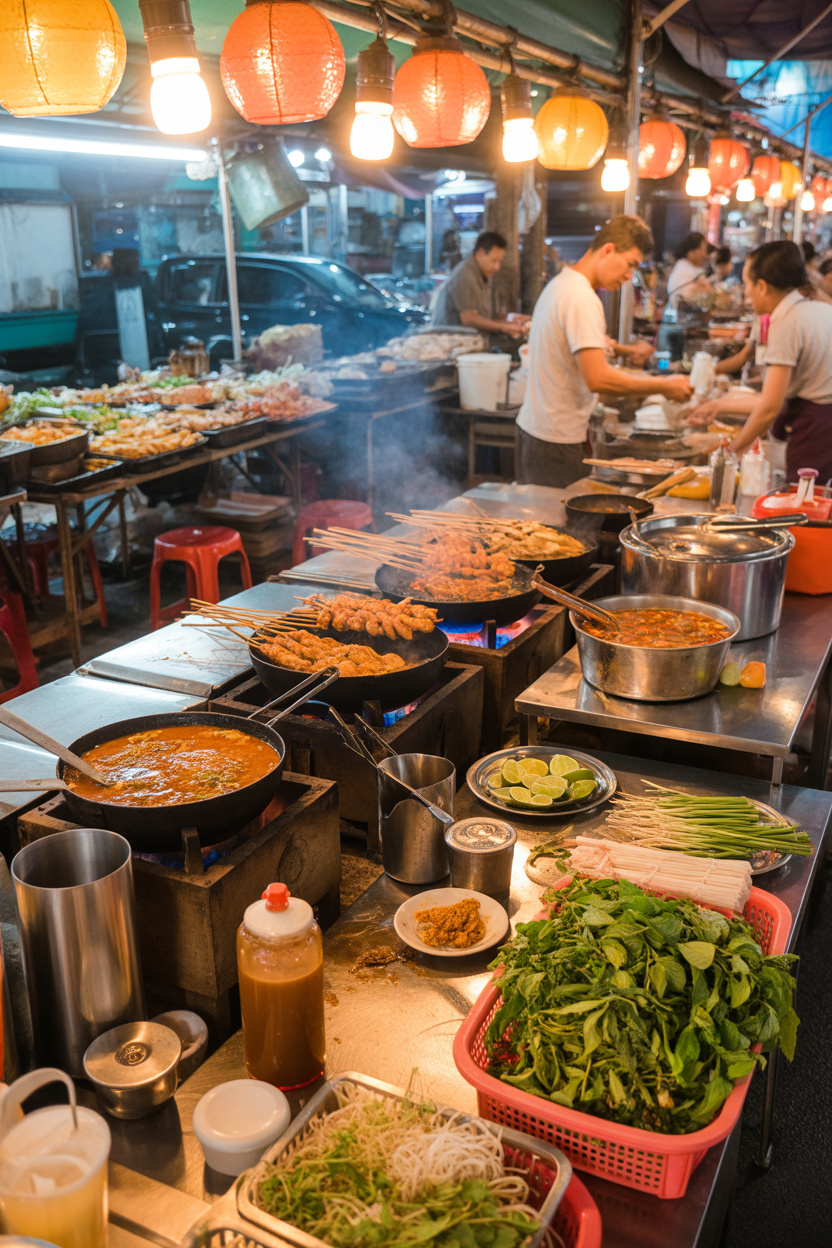
Let's talk about the elephant in the room—food safety. I'm not gonna lie to you: I've gotten sick exactly three times in ten years of eating street food in Thailand. That's a pretty good track record, but it's not zero. The key is knowing what to look for and what to avoid.
First rule: eat where locals eat. If you see a long line of Thai people waiting for food, that's your green light. High turnover means ingredients are fresh and getting used quickly. That vendor isn't letting chicken sit out in the heat all day because they're cooking it as fast as people can order it. I've never gotten sick from a busy stall. The times I did get sick? Quiet places where I was the only customer and probably should've known better.
Watch how the vendor handles money versus food. Good vendors have a system—one person cooks, another handles cash. If you see someone touching money and then immediately touching your food without washing their hands, maybe reconsider. I know this sounds paranoid, but I've learned to trust my gut (literally). Ice is generally fine in Thailand now—they use factory ice, not tap water ice. I drink iced drinks all the time without issues.
Here's what I personally avoid: pre-cut fruit that's been sitting out for hours (the sugar attracts bacteria), seafood from inland areas (stick to coastal regions for seafood), and anything that looks like it's been there since morning. Also, if your stomach is particularly sensitive, maybe ease into the spice levels. Thai food is spicy by design, and jumping straight into "Thai spicy" when you're not used to it can wreck your digestive system even if the food is perfectly safe.
The honest downside? Sometimes you just get unlucky. Food poisoning happens, even with all the precautions. I carry Imodium everywhere I go in Thailand—not because I expect to get sick, but because it's good insurance. Most cases are mild and pass within 24 hours anyway. Don't let fear stop you from experiencing some of the best food on the planet.
What It Actually Costs Per Day
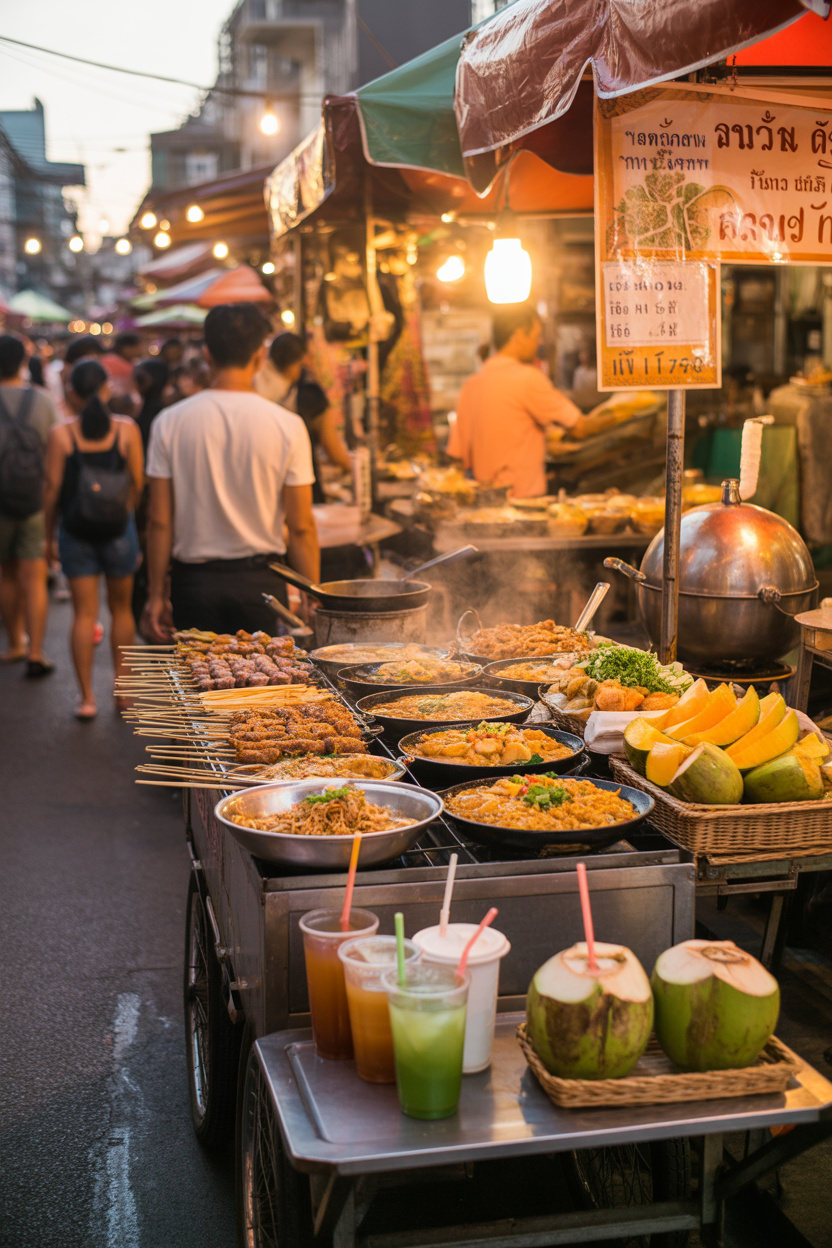
Time for some real numbers based on how I actually eat when I'm in Thailand. If you're eating three meals a day from street vendors, you can easily do it for ฿300-500 per day ($8.40-14) — and that's just Bangkok. If you're weighing up what it costs to eat in Chiang Mai vs Bangkok, the north is even cheaper. That's breakfast, lunch, dinner, and probably a snack or two because you can't walk past a mango sticky rice vendor without stopping.
Breakfast is usually the cheapest meal. I'm talking ฿50-70 ($1.40-2) for something filling like Jok (rice porridge) or Patongko (Thai donuts) with soy milk. Lunch might run you ฿60-100 ($1.70-2.80) for a solid plate of rice with curry or stir-fried something. Dinner is where you might splurge a bit more, especially if you're at a night market—maybe ฿100-200 ($2.80-5.60) depending on what you order.
Drinks add up faster than you'd think. A fresh coconut costs ฿30-40 ($0.85-1.10), Thai iced tea runs ฿20-30 ($0.55-0.85), and bottled water is ฿10-15 ($0.28-0.42). I probably spend an extra ฿100 ($2.80) daily just on drinks because it's hot and I'm constantly thirsty. If you're planning your budget, check out our budget calculator to track daily spending in both currencies.
Here's where people mess up: they see the low prices and think they can eat like kings for nothing. Then they hit the markets and start ordering everything that looks good, and suddenly they've spent ฿800 in one night. It happens. The food is cheap enough that it's easy to go overboard. I've done it more times than I can count, and I'm not even sorry about it.
The caveat? Tourist areas charge more. That ฿50 Pad Thai in a local neighborhood becomes ฿120-150 near major attractions. The quality isn't better—you're just paying for location. Walk two blocks away from the main tourist drag, and prices drop significantly. Same food, half the cost, better atmosphere because you're eating with locals instead of tour groups.
🎫What I'd Actually Do
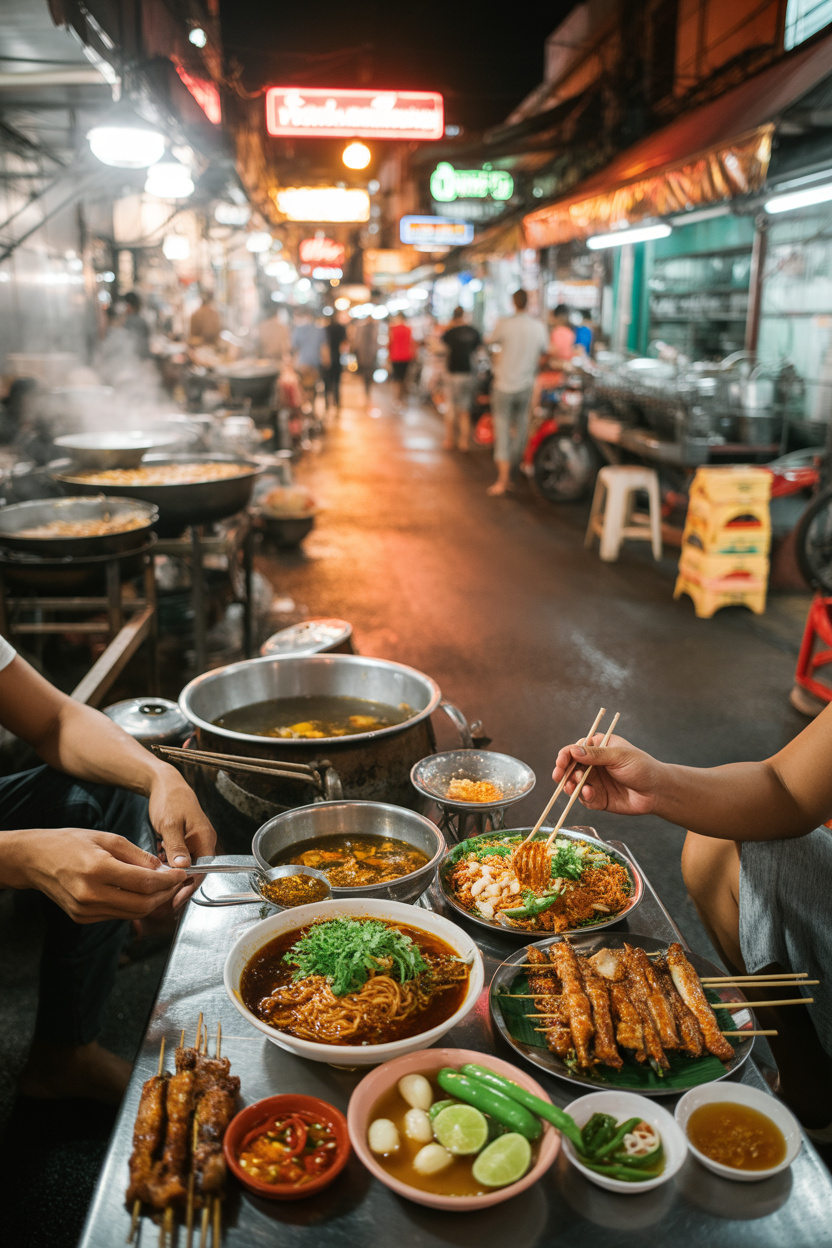
After a decade of trial and error (and some memorable stomach incidents), here's my actual strategy. Start your street food journey slowly. If it's your first time in Thailand, don't hit the most intense markets on day one when your stomach is still adjusting to the time change and new environment. I usually spend my first couple days eating at established street food restaurants—places with walls and menus—before diving into the full cart-and-stall experience.
Download Google Maps and save vendors as you find good ones. I have over 200 saved locations in Bangkok alone. When someone asks me where to eat, I just share my map. Take photos of business cards (many vendors have them) or the stall itself so you can find it again. Trust me, trying to remember "that boat noodle place near the temple" without any other details is impossible when every neighborhood has 15 boat noodle places.
Bring hand sanitizer and tissues everywhere. Public bathrooms near street food areas are hit or miss, and you'll want to clean your hands before eating. I keep a small bottle in my bag at all times. Also, carry small bills — many vendors can't break ฿1000 notes, and you'll hold up the line while they try to find change. If you're working remotely from Thailand, mapping out your favorite street food spots becomes part of the daily routine.
Learn a few basic Thai phrases. "Mai pet" means not spicy, "pet nit noi" means a little spicy, and "aroi mak" means delicious (vendors love hearing this). You don't need to be fluent, but making an effort goes a long way. I've gotten free extra portions just for attempting to speak Thai, even when my pronunciation was terrible.
Planning a trip to Bangkok? Our trip planner builds a full day-by-day itinerary with food recommendations included. Or use the budget calculator to figure out exactly how much you'll spend on food, accommodation, and transport.
Planning a trip to Thailand?
Use our free budget calculator to see what things actually cost. Real prices from real trips — no BS, no guesswork.
Calculate Your Budget