
Getting Your PADI Certification in Koh Tao: Where I Learned to Breathe Underwater
This post contains affiliate links. We may earn a commission at no extra cost to you. Full disclosure
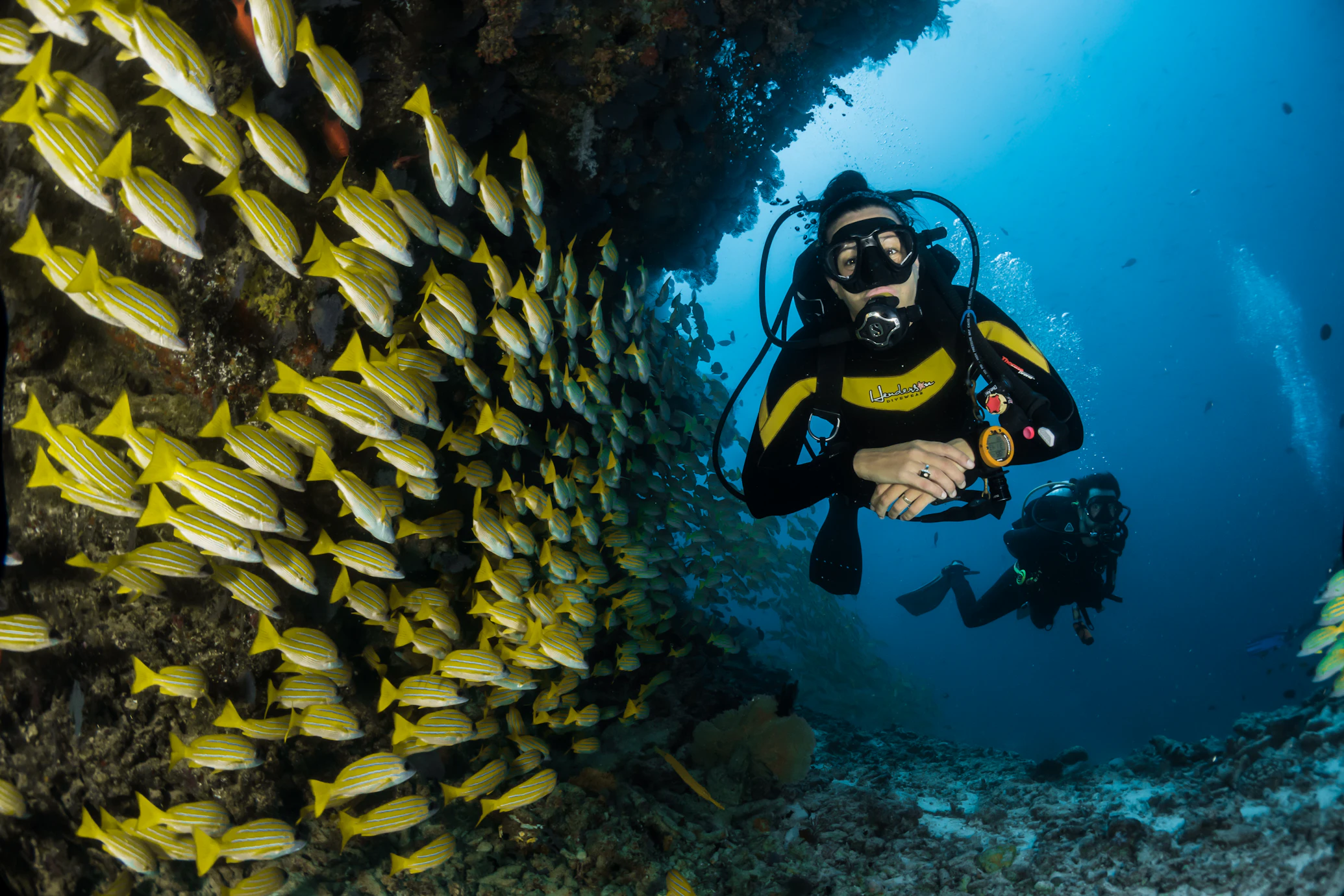
I'll never forget that first breath underwater. Eight meters below the surface of the Gulf of Thailand, my instructor held my gaze through his mask and gave me the "OK" sign. I nodded back, then slowly inhaled through my regulator. The sound—that mechanical, Darth Vader rasp of compressed air flowing into my lungs—felt simultaneously alien and miraculous. I was breathing. Underwater. Actually breathing.
That's when the panic melted away and pure wonder took over.
This was day three of my PADI Open Water certification in Koh Tao, a tiny island off Thailand's east coast that processes more diving certifications than anywhere else on Earth. I'd arrived four days earlier with exactly zero diving experience and a vague anxiety about whether I could actually do this. Now I was hovering weightless above a coral garden, watching a green sea turtle glide past like it was the most natural thing in the world.
The turtle looked at me. I looked at the turtle. And right then, I understood why people become obsessed with diving.
Why Koh Tao Became the World's Diving Capital
Let me give you the numbers first, then tell you what they actually mean: Koh Tao has over 50 dive schools crammed onto an island barely 21 square kilometers. They issue somewhere between 100,000 and 150,000 PADI certifications annually. An Open Water course costs $250-350 here—the same certification runs $600-800 in Australia, Europe, or North America.
But here's what those numbers really mean: you're arriving at an island where diving isn't just an activity, it's the entire economy. Ferry boats unload hundreds of aspiring divers every day. Beach bars fill with newly certified divers comparing turtle sightings. Instructors speak a dozen languages. The competition between dive schools is so fierce that you get Western-standard instruction at Southeast Asian prices.

I chose Koh Tao because I was already traveling through Thailand and someone at a Bangkok hostel told me, "If you're going to learn to dive anywhere, do it in Koh Tao. It's stupid cheap and the diving's actually good." This turned out to be the understatement of my trip.
The water temperature hovers around 27-29°C year-round—warm enough that you only need a 3mm wetsuit. The Gulf of Thailand serves up calm conditions most of the year, with visibility ranging from 10-25 meters depending on the season. The dive sites around Koh Tao aren't the most spectacular in Southeast Asia—you're not comparing this to Raja Ampat or Komodo—but they're perfect for learning. Gentle slopes, sandy bottoms, moderate depths, and enough marine life that every dive feels rewarding.
More importantly, Koh Tao's entire infrastructure exists to teach people to dive. Your instructor has probably certified thousands of students. The boat captains know exactly where to position for easy entries. The dive shops have equipment in every possible size. Everyone on the island either dives, teaches diving, or services the diving industry. You're not an oddity here—you're the entire point.
What It Actually Costs (And What You Actually Get)
My Open Water certification through Crystal Dive cost $280 in 2018. Checking with friends who certified more recently, prices in 2025 hover between $250-350 depending on which school you choose and whether it's high season. That $280 included:
Every piece of equipment I needed. BCD (that's the vest thing), regulator (the breathing apparatus), wetsuit, mask, fins, weights, tank, the whole package. Nothing hidden, nothing extra to rent.
Four open water dives over two days, plus all the pool training beforehand. Two boat trips out to actual dive sites where I saw real turtles and real sharks and real coral reefs.
Professional instruction from a British guy named Rob who'd been teaching in Koh Tao for seven years and had the patience of a saint when I kept forgetting to equalize my ears properly.
Three nights in a basic dorm room at the dive school. Fan-cooled, shared bathrooms, about eight beds per room. Not glamorous, but clean and perfectly adequate when you're spending 8-10 hours per day either in the water or passed out exhausted.
The PADI digital certification card, which appears in an app on your phone and is accepted anywhere in the world you want to dive. Forever.
Here's the comparison that convinced me to fly back to Thailand six months later for my Advanced certification: that same course in Sydney costs $650-800. Just the course. No accommodation, equipment rental often extra, and you're doing your training dives in water cold enough to require a 5-7mm wetsuit. My Thai-certified friend back home priced out Advanced courses in Melbourne—$500-700. I could fly to Thailand, get the certification, spend a week diving, and still spend less than doing it locally.
The economics are absurd. But they're real.
Beyond Open Water, the pricing structure continues to favor Koh Tao dramatically:
Advanced Open Water: $200-300 for two days and five specialty dives. This bumps your maximum depth from 18 meters to 30 meters, which opens up wreck diving, deeper walls, and significantly more interesting dive sites worldwide. In Western countries, expect $400-600.
Rescue Diver: $250-350 for three days focusing on safety, emergency procedures, and learning to help other divers in distress. Many people say this is the most rewarding certification. It costs $450-700 elsewhere.
Divemaster: $800-1,200 for six to eight weeks of intensive training that takes you to professional level. This is your entry ticket to working in the diving industry. In Australia or the USA, Divemaster programs run $2,000-3,500.
I did Open Water and Advanced in Koh Tao for a combined $530. That exact package back home would have cost $1,100-1,400 minimum. The savings covered my entire flight from Australia to Thailand.
Choosing a Dive School (And Why It Actually Matters)
On my first afternoon in Koh Tao, I walked the main beach road and visited six different dive schools. They all quoted similar prices. They all showed me PADI certificates on the wall. They all seemed professional enough. But the vibes were completely different.
Crystal Dive, where I eventually booked, felt like a well-oiled machine. Huge compound, dozens of instructors speaking every language imaginable, equipment room that looked like a warehouse, computerized booking system. Very corporate, very organized. The Thai woman at reception answered every nervous question I asked with practiced efficiency.
Big Blue Diving had a bar and restaurant out front where backpackers lounged with beers at 2pm. Loud music, party atmosphere, instructors who looked about 23 years old. The German guy working reception was friendly but seemed slightly hungover. Not necessarily bad, just... different energy.
Ban's Diving Resort occupied a beautiful beachfront property with an actual swimming pool for confined water training. Everything looked more expensive, more polished. They quoted $320 versus Crystal's $280, but the instructor-to-student ratio was lower and the woman giving me the tour emphasized their "premium experience."
Scuba Junction occupied a humble shop front up the hill from the main beach. They quoted $250, the lowest I found. Family-run operation, maybe 10 instructors total, much smaller scale than Crystal or Big Blue. The Australian guy running it was super laid-back: "We keep prices low, groups small, and we've been doing this for 15 years. You'll be fine, mate."
Here's what I learned after doing Open Water at Crystal and returning later for Advanced at Big Blue: the school matters less than the specific instructor you get paired with. Crystal's organization gave me confidence as a nervous beginner—I felt like I was in safe hands, like they'd done this ten thousand times before. Big Blue's social atmosphere was more fun for Advanced when I already knew what I was doing and wanted to meet other divers at the bar after.
If you're anxious about diving or it's your first big adventure activity, go with Crystal or Ban's. You'll pay slightly more for the structure and professionalism. If you're comfortable with adventure travel and want to party with other backpackers while getting certified, Big Blue or Big Bubble deliver that vibe. If you're budget-conscious and just want solid instruction without frills, Scuba Junction or similar smaller operators offer excellent value.
But regardless of which school you choose, visit in person before booking. Check the equipment—does it look well-maintained or beat up? Ask to meet your instructor—do they speak your language fluently, are they patient, do they seem safety-conscious? Read recent Google and TripAdvisor reviews looking for patterns, not one-off complaints.
The $70 difference between the cheapest and most expensive schools matters less than feeling confident in the operation. You're trusting these people with your life underwater. Choose based on gut feeling and safety, not just saving $20.
My Open Water instructor Rob had a rule: any student could call off a dive for any reason, no questions asked, no judgment. On my first ocean dive, the girl in my group got to the entry point and just shook her head—too nervous. Rob calmly helped her back onto the boat and told her to sit this one out, try again next dive. No pressure, no mockery. That level of patience and understanding made me trust him completely. When I later struggled with buoyancy control and kept floating upward, he worked with me for 20 extra minutes until I got it right. Choose an instructor who radiates calm competence.
The Four Days That Changed How I See the Ocean
Day one started at 8am with classroom theory. Rob covered dive physics (pressure increases with depth, air compresses, never hold your breath), equipment function (how regulators work, what BCDs do, why we wear weights), and safety procedures (what happens if your mask floods, how to share air, emergency ascent procedures). This sounds tedious but Rob made it engaging with stories about funny student mistakes and occasional disasters avoided.
The physics actually matters. You need to understand why holding your breath while ascending can rupture your lungs. You need to know why you feel pressure in your ears and how to equalize. You need to comprehend what nitrogen narcosis is and why we don't dive too deep. This isn't abstract—this is life-or-death information delivered in a way that makes sense.
Afternoon of day one: pool training. Crystal has a training pool maybe four meters deep. Rob helped me assemble my equipment—this part is intimidating at first, all these hoses and clips and adjustments—then we practiced basic skills. Clearing water from your mask underwater. Retrieving your regulator if it gets knocked out of your mouth. Achieving neutral buoyancy so you neither float up nor sink down. Taking off your equipment underwater and putting it back on.
Some of this felt counterintuitive. When your mask fills with water and you can't see, every instinct screams "surface immediately!" But you learn to stay calm, press the top of your mask, exhale through your nose, and watch the water drain out. It works. It actually works. That first successful mask clear felt like sorcery.
Day two continued pool work, refining those skills until they became automatic. Rob deliberately knocked my regulator out of my mouth to simulate an emergency. The trick is to sweep your right arm backward in a big arc—you'll almost certainly catch the hose, then bring it forward and clear it with a big exhale. Sounds complicated. After practicing ten times, it became muscle memory.
The hardest skill? Buoyancy control. You're wearing weights to offset the buoyancy of your wetsuit and the air in your BCD. Too much air in the BCD and you float upward. Too little and you sink to the bottom. Breathing also affects your buoyancy—a full breath makes you slightly more buoyant, exhaling makes you sink slightly. Achieving perfect neutral buoyancy where you hover motionless at a specific depth requires constant tiny adjustments. Some students got this immediately. I struggled for a full hour before something clicked.
Day three: open water dives. Finally.
The boat ride to our first dive site (Mango Bay, a shallow sandy area perfect for beginners) took 20 minutes. Rob gave a thorough briefing: maximum depth 12 meters, we'll descend down a line, practice some skills on the sandy bottom, then swim around for 25 minutes. Any problems, signal immediately. Everyone understand? Everyone looked nervous but nodded.
That first descent down the mooring line remains vivid years later. The light shifted from bright sunlight to blue-green dimness. My ears squeaked as I equalized. Bubbles streamed upward past my mask. The sandy bottom materialized below, maybe eight meters down. And then we were on the bottom, kneeling in the sand, and Rob was looking at each of us checking we were okay.
That's when I took that first real breath underwater and everything changed.
We practiced mask clearing again, regulator recovery, buoyancy checks. Then Rob signaled and we swam. Actually swam. Finning slowly across the sandy bottom, past coral formations, between schools of small tropical fish that scattered and regrouped. A pufferfish watched us from inside a coral head, its bulbous eyes tracking our movement. The whole world was blue and silent except for my breathing.
Twenty-five minutes passed like five. Surface interval (the mandatory rest period between dives where nitrogen off-gasses from your body), then dive two at White Rock. This one went to 14 meters and featured more coral, more fish, better visibility. I was already more comfortable, more confident. When my mask partially flooded during the dive, I cleared it without panicking. Progress.
Day four delivered the final two certification dives at Japanese Gardens and Hin Wong Pinnacle. These were deeper (16-18 meters) and more spectacular. Japanese Gardens lived up to its name—coral gardens stretched across the sloping reef like someone had deliberately landscaped them. Fish were everywhere: triggerfish, angelfish, parrotfish, clouds of yellow snappers, clownfish darting among anemones.
And then: the turtle.
A green sea turtle maybe a meter long glided past about three meters away, completely unbothered by the five humans exhaling bubbles nearby. It swam with slow, graceful strokes, occasionally pausing to nibble at coral. Rob pointed excitedly. We all stopped swimming and just watched, suspended in the blue, as this ancient reptile went about its day. The turtle cruised right up to me, looked directly into my mask with one dark eye, then powered away with a few strong strokes.
That encounter lasted maybe 45 seconds. It felt like visiting another planet.
After the fourth dive, back on the boat, we were all grinning like idiots. Rob said, "Congratulations, you're all certified divers now. Welcome to the underwater world." We'd done it. Four days ago I couldn't breathe underwater. Now I could explore this entire alien environment.
That evening, Crystal Dive printed my temporary certification card while processing the official PADI registration. Within 48 hours, my digital certification appeared in the PADI app on my phone. I was officially a PADI Open Water diver, certified to dive anywhere in the world to a maximum depth of 18 meters.
I'd planned to leave Koh Tao the next morning. Instead, I stayed another week and did ten more fun dives.
What You'll Actually See Underwater
Koh Tao isn't Raja Ampat or the Maldives or the Great Barrier Reef. Let's be honest about that. The coral took damage from bleaching events and storms. Some sites show wear from the sheer volume of divers. You're not going to see whale sharks on every dive or encounter manta rays daily.
But here's what you will see, almost guaranteed: green sea turtles. Koh Tao has resident turtle populations at multiple dive sites. Japanese Gardens, Twin Peaks, and Mango Bay almost always deliver turtle encounters. These aren't shy reef turtles that bolt when you approach—they're habituated to divers and largely unbothered by bubbles. You can watch them feeding, swimming, just existing in their environment. Every dive I did in Koh Tao, I saw at least one turtle. Several dives, I saw four or five.
Blacktip reef sharks appear regularly at sites like Shark Island and Chumphon Pinnacle. These are small, harmless sharks (maybe 1.5 meters long) that hunt small fish in the shallows. They're more scared of you than you are of them. Seeing your first shark underwater triggers a primal response—every movie about killer sharks flashes through your mind—then you realize it's just a beautiful animal doing its thing. The blacktips typically cruise past, completely disinterested in divers.
The tropical fish diversity is excellent for learning. Clownfish hide in anemones. Pufferfish hover near coral heads. Parrotfish crunch coral all day making sand. Triggerfish guard their nesting territories aggressively (give them space). Moray eels peer out from crevices. Lionfish drift along hunting. If you're into underwater photography, the macro life is fantastic: nudibranchs, shrimp, crabs, tiny gobies perched on coral, cleaner wrasses setting up cleaning stations where bigger fish queue up for parasite removal.
Occasionally, usually during March-May or October, whale sharks appear around Koh Tao. These are 5-10 meter gentle giants that feed on plankton. They're completely harmless—they literally can't eat you, their throats aren't big enough. Encounters are rare and unpredictable. Don't expect it. But if you get lucky and see one, it's a once-in-a-lifetime experience. I've done maybe 50 dives around Koh Tao and never seen a whale shark, but I met someone who saw one on their second-ever dive. Diving is like that—sometimes the ocean just delivers magic.
The dive sites themselves suit learning perfectly. Mango Bay offers sandy bottom at 8-12 meters, ideal for practicing skills. White Rock features easy topography with good fish life. Japanese Gardens slopes gently from 8 to 18 meters with beautiful coral gardens. Shark Island has a bit more current but excellent shark sightings. Twin Peaks offers swim-throughs and interesting rock formations. Chumphon Pinnacle is the star—a massive underwater mountain rising from 30+ meters to about 14 meters at the peak, covered in soft corals, surrounded by fish schools, frequented by sharks and sometimes eagle rays.
Visibility varies by season. December through March offers 15-25 meters of crystal-clear water. April-May drops to 10-20 meters. June through September (monsoon season) can be 5-15 meters with occasional days of poor visibility. But here's the thing: as a learning diver, you don't need 30-meter visibility. You're staying close to your instructor and focusing on skills, not peering into the distance. Even 10-meter visibility feels expansive underwater.
Water temperature stays comfortable year-round. That 27-29°C means you wear a thin 3mm wetsuit (provided by your dive school) and never feel cold. Compare this to learning in California or the UK where you need thick drysuits and the cold is a major distraction.
About that first breath underwater: Everyone asks if it feels weird. Yes, initially. Breathing through a regulator requires slightly more effort than normal breathing—you're pulling air from a tank through pressure-reducing valves. The sound is loud in your own head. It takes 10-15 minutes before it feels natural. Then it becomes meditative. Breathe in: rasp of air, lungs expand, slight rise. Breathe out: stream of bubbles, lungs empty, slight sink. Your breathing controls your buoyancy, your air consumption, your experience. Once you relax into it, diving becomes the most peaceful activity imaginable.
The Real Cost of Getting Certified (Beyond the Course Price)
My total spend for the four-day Open Water certification broke down like this:
Course: $280 (this was 2018; expect $250-350 in 2025)
Ferry from Koh Samui: $25 round trip (or come from Chumphon on the mainland for similar price)
Accommodation: $0 for three nights (included in course), then $15/night for four additional nights when I extended my stay = $60
Food: Roughly $12/day eating mix of street food ($2-3/meal) and tourist restaurants ($5-8/meal) = $96 for eight days
Drinks: I wasn't partying much during the course (alcohol and diving don't mix), maybe $5/day, heavier after certification, averaged $8/day = $64 total
Extra fun dives: 10 dives at $23/dive = $230
Dive computer rental: $7/day for six dive days = $42
Underwater photos: $30 for professional photos from two boat trips
Logbook: $12 for physical dive logbook
Random expenses: Sunscreen, snacks, motorbike rental one day, beach bar tabs = ~$60
Total for 8 days in Koh Tao: approximately $900, which included certification, accommodation, all food, and 10 additional fun dives
If I'd just done the certification and left, the total would've been around $450-500 for the four-day trip. But I stayed longer because I was hooked on diving. That's the pattern I saw repeated constantly: people plan four days, stay ten. Plan a week, stay three weeks. Plan two weeks, sign up for Divemaster and stay two months.
Koh Tao has gravitational pull once you start diving.
For accommodation, the free dorm included with most courses works fine. Fan-cooled, basic beds, shared bathrooms, nothing fancy—but you're barely in your room anyway. If you want to upgrade, budget hostels run $8-12/night for AC dorms or $15-25/night for private rooms. Beachfront bungalows with nice amenities cost $25-40/night.
Food remains extremely affordable. Pad Thai from street vendors: $2-3. Fried rice or noodle soup: $2-3. Tourist restaurant meals: $4-8. Western breakfast: $4-6. Beer: $2-3 for local (Chang, Singha), $4-5 for imported. A beach bar sunset beer while discussing the day's turtle sightings costs less than a coffee at Starbucks back home.
The one thing I regret not buying: better quality underwater photos. I cheaped out and only got photos from two dives, and they're the only visual memories I have of my first certification dives. Spend the $30-40 for professional photos. Your phone doesn't work underwater and you'll want these memories.
Should You Continue Beyond Open Water?
Three days after getting my Open Water certification, nursing a slight hangover from celebrating too enthusiastically, I walked back into Crystal Dive and asked about Advanced Open Water courses.
"Starting Monday," the receptionist said. "Two days, five dives, $250. You'll do a deep dive to 28-30 meters, navigation training, and three adventure dives. Most people choose wreck diving, night diving, and peak performance buoyancy."
I signed up immediately.
Here's why: Open Water certifies you to 18 meters maximum depth. That's fine for many dive sites, but it locks you out of the best ones. Wreck diving usually happens deeper than 18 meters. Many wall dives start at 20 meters. Some marine life (sharks, rays, bigger fish) tend to cruise at depths where Open Water can't go. Advanced certification extends your limit to 30 meters and includes specialty training that makes you a better, safer diver.
The practical progression path works like this:
Start with Open Water (3-4 days, $250-350). Learn the fundamentals, get comfortable underwater, discover if you even like diving. About 90% of recreational divers stop here—it's sufficient for most holiday diving.
If you enjoyed Open Water and plan to dive more, immediately do Advanced Open Water (2 days, $200-300). The deep dive teaches you how your body responds at depth. The navigation training teaches compass work and natural navigation. The three adventure dives let you sample different specialties. You become a more capable diver and open up access to significantly better dive sites worldwide.
The Advanced course in Koh Tao introduced me to wreck diving at HTMS Sattakut, a 50-meter Thai naval vessel deliberately sunk in 2011. The wreck sits at 18-30 meters—the top is accessible to Open Water divers, but the interesting parts (swim-throughs, the wheelhouse, the engine room) require Advanced certification. Swimming through a dark corridor inside a sunken warship 28 meters underwater, with only my torch and my buddy beside me, ranks among the most thrilling experiences of my life.
If you get really serious about diving, Rescue Diver (3 days, $250-350) comes next. This is safety-focused training: emergency response, helping panicked divers, rescue procedures, first aid. Many people say Rescue is the most rewarding certification—it transforms you from someone who can dive to someone who can help others dive safely. It's also prerequisite for professional certification.
Divemaster (6-8 weeks, $800-1,200) is the first professional level. You can assist instructors, lead certified divers, and work in the dive industry. Koh Tao is the best place in the world to do this—the cost is half of Western countries, you get massive practical experience because the schools run so many courses, and many people work at dive shops afterward to offset the cost. I met Germans, Australians, Brits, and Americans who'd come to Koh Tao for two weeks, got their Divemaster, and stayed six months working at dive shops. Some made it a career.
The smart financial move if you know you'll dive long-term: do Open Water, immediately do Advanced, then book 10-15 fun dives to practice your skills. That package (Open Water + Advanced + 10 fun dives) costs about $750-850 in Koh Tao. The same progression in Australia, Europe, or North America runs $1,500-2,000 minimum. You save enough to cover your flight to Thailand.
Six months after my Koh Tao certifications, I wanted to dive the Great Barrier Reef. The most interesting sites required Advanced certification. If I'd stopped at Open Water, I would've been restricted to shallow beginner sites. Instead, I dove Cod Hole, explored deeper pinnacles, and saw gray reef sharks, potato cod, and giant groupers—none of which I would've accessed with only Open Water.
Do Advanced while you're in Koh Tao. You're already in diving mode, the cost is minimal, and you'll thank yourself every time you dive afterward.
Safety: Addressing the "Death Island" Reputation
I need to talk about this because it comes up constantly. Koh Tao gained an unfortunate nickname ("Death Island") from several tourist deaths during 2014-2015. These were suspicious deaths—possible murders, definitely mysterious circumstances—that got major media attention. Terrible tragedies that traumatized families and damaged Koh Tao's reputation.
But here's the crucial detail: those deaths were not diving-related. They involved young tourists found dead in their bungalows or on beaches, with investigations that went nowhere and local police work that appeared incompetent or possibly corrupt. These incidents raised serious questions about safety on Koh Tao, about police investigations, about whether local dive industry powers covered up problems.
The diving itself has an excellent safety record. With 100,000+ certifications issued annually over many years, serious diving accidents are extremely rare. The math works in Koh Tao's favor: millions of dives logged safely, professional instructors following international PADI standards, good diving conditions, readily available medical facilities including a hyperbaric chamber.
I researched this extensively before my trip because those "Death Island" articles genuinely worried me. What I found: diving in Koh Tao is statistically very safe. Dive shops follow PADI protocols religiously—their entire business depends on safety reputation. Equipment gets regularly serviced. Instructors have thousands of certifications under their belts. Medical evacuation procedures exist. The hyperbaric chamber on the island treats decompression sickness (though this is extremely rare for recreational diving within limits).
The risks in diving come from ignoring safety procedures: diving while hungover or drunk (alcohol increases decompression sickness risk), ascending too fast (lung overexpansion), skipping safety stops (nitrogen buildup), diving beyond certification limits, ignoring equipment problems. Follow the rules and diving is remarkably safe.
During my eight days in Koh Tao, I felt completely safe. Crystal Dive ran thorough safety briefings before every dive. Rob checked everyone's equipment personally. Maximum group size was six students to one instructor. Every dive featured detailed plans, emergency procedures, and communication protocols. When one student had ear equalization problems and couldn't descend past 8 meters, Rob calmly brought her back to the boat with zero pressure or judgment.
Should you be cautious in Koh Tao? Yes, like anywhere. Don't walk alone drunk at night. Don't leave drinks unattended. Be aware of your surroundings. The general safety concerns that apply to any tourist destination apply here.
Should you worry about diving safety specifically? Not if you choose reputable dive schools and follow procedures. Millions of people have gotten certified in Koh Tao safely. The professional schools have excellent track records.
Check these factors before booking:
- Valid PADI/SSI certification displayed prominently in the shop
- 200+ Google/TripAdvisor reviews averaging 4.5+ stars
- Equipment that looks well-maintained (ask to see it)
- Clear safety briefings in your language
- Instructor-to-student ratio of max 6:1, preferably 4:1
- Professional vibe, not party-first atmosphere
Don't party the night before diving. Don't dive hungover. Listen to your instructor. Signal immediately if you have any problems underwater. Diving is very safe when you follow the rules.
When to Go: Seasons and Timing
I went in late February, right in the middle of peak season. The diving was spectacular—sunny weather, calm seas, 20+ meter visibility, water so clear I could see the bottom at 15 meters. The downside: Koh Tao was packed. Boats loaded with 30+ divers. Popular dive sites had five boats moored simultaneously. The beaches were crowded. I had to book my course one day in advance instead of just walking up.
Friends who went during monsoon season (July-August) reported a different experience: far fewer divers, smaller class sizes, more personal attention from instructors, emptier dive sites. The weather was rainier—afternoon showers, occasionally rough seas, some dive trips canceled due to conditions. Visibility dropped to 10-15 meters. But the course price dropped 15-20%, accommodation was cheaper, and the smaller groups meant way more one-on-one instructor time.
Peak season (December-March): Perfect weather, best visibility, most expensive accommodation, most crowded dive sites. Book your course 1-2 days ahead. Expect to share dive sites with multiple other groups. Weather is basically guaranteed good.
Shoulder season (April-May, October-November): Still good conditions, occasional rain, moderate crowds. Sometimes you can walk up and book same-day. Prices occasionally drop 10-15%. Good balance of weather and crowds.
Monsoon season (June-September): Rainy and rougher, but still diveable most days. Lowest prices, smallest crowds, most personal attention. Visibility is reduced but adequate for learning. Some days you'll be rained out. Budget divers love this season—you save money and get better instruction due to smaller groups.
If you care most about perfect conditions and don't mind crowds: December-March.
If you want the best value and don't mind some rain: June-September.
If you want middle ground: shoulder seasons.
Personally, if I were doing it again, I'd go in October or November. You get decent weather, smaller crowds than peak season, and slightly better prices. But honestly, Koh Tao works year-round. They wouldn't certify 100,000+ people annually if the diving was only good three months per year.
What Happens After You're Certified
The PADI certification card that appeared on my phone three days after my final dive is valid for life, anywhere in the world. No renewal required, no retest needed, no expiration date. Once you're certified, you're certified.
That card opened up diving worldwide. I've since dived the Great Barrier Reef in Australia, explored cenotes in Mexico, gone wreck diving in Chuuk Lagoon, done drift diving in Komodo, and dived coral gardens in the Maldives. Every time, I show my PADI card (or just the app on my phone), log some recent dives or do a checkout dive if I haven't dived recently, and I'm cleared to dive.
The underwater world that was completely inaccessible before that four-day course in Koh Tao? It's all open now. Seventy percent of the Earth's surface is ocean. I can explore it. That certification was a key to an enormous portion of the planet.
I can't count how many people I met in Koh Tao who said some version of: "I planned to stay three days, get certified, and leave. That was two weeks ago." The island has that effect. You get certified, you immediately want to dive more, you book fun dives, you start chatting with other divers about where they've dived, you hear about night diving or wreck diving or the upcoming boat trip to Sail Rock, you extend your stay again.
One American woman I met had come for Open Water certification and was on week five, halfway through her Divemaster course. A German couple arrived for a week and stayed three months working at Big Blue Diving. An Australian guy showed up with a one-week plan and ended up staying six weeks, doing Open Water through Rescue Diver, then bouncing around Thailand diving different locations.
Koh Tao does that. The diving pulls you in. The community of other divers keeps you there. The affordability makes extended stays possible. The lifestyle—dive mornings, beach afternoons, sunset drinks comparing turtle sightings—becomes addictive.
The Moment It Clicks
Halfway through my Advanced Open Water course, 28 meters down during my deep dive at Chumphon Pinnacle, I experienced the moment when diving transformed from "exciting scary activity" to "holy shit I actually feel comfortable down here."
We'd descended down the pinnacle wall, watching soft coral and fish life get denser as we dropped. At 28 meters, we stopped to do a color test (colors disappear at depth—reds look brown, oranges look green, it's weird) and a quick reaction time test (you get slightly buzzed from nitrogen at depth). I was concentrating on the tasks when I noticed my breathing had become automatic. I wasn't thinking about each breath anymore. I wasn't monitoring my buoyancy constantly. I was just... diving. Being underwater felt normal.
A school of fusiliers streamed past, hundreds of small silver fish moving as one organism. A bluespotted stingray lay camouflaged on a sandy patch. Two blacktip reef sharks cruised along the base of the pinnacle. Above us, the surface was a distant rippling ceiling of silver-green light. And I was hovering here, weightless, neutrally buoyant, comfortable, breathing underwater like it was the most natural thing in the world.
That's the moment you're working toward during certification. When the equipment becomes invisible, when the procedures become automatic, when you stop thinking about diving and just start experiencing it. Some people get there on their first ocean dive. Some people need ten dives. But everyone gets there eventually.
For me, it happened at 28 meters on a wall in the Gulf of Thailand, watching sharks patrol their territory while I hung suspended in blue water. And I thought: this is why people become obsessed with diving.
Practical Tips From Hard-Won Experience
Visit multiple dive schools in person before booking. Yes, the prices are similar. Yes, they all follow PADI standards. But the vibe differs enormously. Walk to three or four schools, check out their equipment, meet staff, read reviews on your phone right there. Trust your gut.
Don't book months in advance from home. Book when you arrive in Koh Tao, 1-2 days ahead maximum (same day during monsoon season). This lets you assess the school in person and ensures you don't prepay some shady operation that looks different in reality.
Buy a logbook and actually log your dives. That $10-15 physical logbook matters for future certifications—you need logged dives to prove experience for Rescue and Divemaster. Plus it's cool to flip through years later and remember specific dives.
Do your Advanced certification immediately if you enjoyed Open Water. It's cheaper in Koh Tao than anywhere else, you're already in diving mode, and you'll be glad you did it every single time you dive afterward.
Budget for fun dives after certification. Don't just get certified and leave. Book 5-10 fun dives to practice your skills and explore better dive sites. This is when diving gets really enjoyable.
Don't party the night before diving. Save the beach bar celebrations for after your last dive of the day. Alcohol and diving is a dangerous combination—dehydration increases decompression sickness risk.
Spend money on underwater photos. You'll want visual memories of your first dives, and your phone doesn't work underwater. The $30-40 for professional photos is worth every baht.
Consider monsoon season if you're budget-conscious. Yes, the weather is worse. But you save 15-20%, get smaller class sizes, and receive more personal instruction. Many instructors prefer teaching during monsoon for exactly this reason.
Stay longer than you plan. This isn't really a tip, more a warning. Koh Tao pulls people in. Budget extra days because you'll probably extend your stay once you start diving.
Why It Matters
I've traveled to 40+ countries. I've done adventure activities all over the world. Learning to dive in Koh Tao remains one of the most important experiences of my entire adult life.
Not because it was the most extreme thing I've done. Not because it was the most Instagram-worthy. But because it opened up an entirely new dimension of travel and exploration that didn't exist before. Seventy percent of the planet was previously inaccessible to me. Now I can explore it.
That four-day course in Koh Tao cost $280 and gave me access to the underwater world for the rest of my life. I've dived three different oceans since then. I've seen reef sharks, manta rays, sea turtles, octopuses, moray eels, whale sharks (eventually), schools of fish so dense they blocked out the sun. I've explored underwater caves in Mexico, wreck dived sunken warships, drifted along coral walls in Komodo, descended to 30 meters to explore a canyon in the Red Sea.
None of that would've happened without those four days in Koh Tao.
The technical skill of diving isn't that hard—if you can breathe and equalize your ears, you can learn to dive. The equipment is remarkably reliable. The safety protocols work. What's actually challenging is overcoming the psychological barrier: humans don't naturally belong underwater, and your brain knows it. That first breath underwater fights against every survival instinct you have.
But when you take that breath and realize it works, when you're hovering weightless over a coral garden watching a turtle glide past, when you understand that this entire alien world is now accessible to you—that's transformative.
Koh Tao is the world's diving certification capital because it's figured out how to make this experience accessible. Affordable courses, professional instruction, good diving conditions, perfect for learning. You can arrive knowing nothing about diving and leave four days later as a certified diver who's seen sea turtles and sharks and tropical fish schools.
The underwater world is waiting. It's magnificent. It's alien. It's worth exploring.
Book your ferry to Koh Tao. Sign up for a course. Take that first breath underwater. Everything changes after that.
Ready to get certified? Start by comparing Thailand's islands and activities in our interactive Thailand guide, or use the budget calculator to plan your complete trip costs. Once you're certified, check out our Thailand island comparison guide to find your next diving destination.
The ocean is calling. Time to answer.
Continue Reading

Thailand Island Comparison 2025: Which Island is Right for You? (8 Islands Compared)
Koh Samui vs Koh Phangan vs Koh Tao vs Koh Lanta - comprehensive comparison of 8 Thailand islands. Monthly costs, vibes, pros/cons, and which island matches your travel style.

Thailand Packing List: What to Bring vs Buy There (2025)
After seven trips and countless packing mistakes, I've learned the hard truth: you need half what you think. Here's the real story of what to pack, what to skip, and what's actually cheaper to buy in Thailand.

Thailand Rainy Season: Is It Worth Visiting? (Honest Guide)
50% cheaper hotels, empty beaches, and it doesn't rain as much as you think. Here's the truth about visiting Thailand in monsoon season.