
Thailand Costs by Month: When to Visit for Best Prices (2025 Guide)
This post contains affiliate links. We may earn a commission at no extra cost to you. Full disclosure
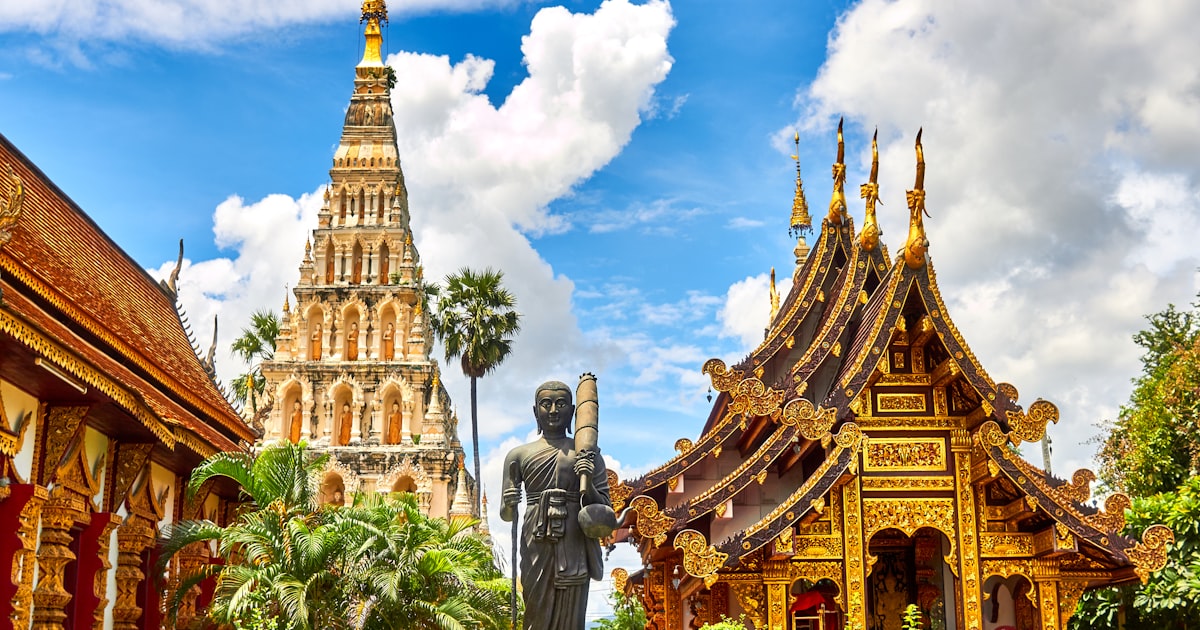
I remember my first January in Thailand. I'd stepped off the overnight train from Bangkok to Chiang Mai into the kind of morning that makes you forget weather can be uncomfortable. The air was crisp—actually crisp, at 7 AM—and within an hour, it warmed to that perfect temperature where you're not thinking about temperature at all. I spent that week riding a scooter through mountain roads, eating khao soi at roadside stalls, and never once checking the forecast because every day was exactly the same: flawless.
Then I came back in July.
The first afternoon, I watched from my guesthouse balcony as the sky turned from brilliant blue to bruised purple in about fifteen minutes. The rain came like someone had turned on a fire hose, thundering against the tin roof so loud I couldn't hear the TV. Ninety minutes later, the sun was out again, steam rising from the pavement, and I was paying 60% less for the same room I'd had in January.
That's when I started understanding Thailand's rhythm. Not just the official "peak" and "low" season boxes that travel websites love to draw, but the actual feeling of each month—the texture of the air, the energy in the streets, the price tags that shift like tides, and most importantly, what you gain and lose by choosing one month over another.
After a decade of visits spread across every month of the year, I've learned that the question "when should I visit Thailand?" has no single answer. But it has twelve very different ones, each with its own personality, its own trade-offs, and its own stories.
Understanding Thailand's Three Acts
Before we dive into the month-by-month journey, you need to understand how Thailand's year unfolds. Think of it as a three-act play, each with a distinct mood and audience.
The Cool Season (November through February) is when Thailand wears its best outfit. The monsoon rains have washed everything clean, temperatures drop to genuinely comfortable levels, humidity backs off, and the whole country seems to exhale after months of heat and rain. This is also when prices soar, crowds multiply, and you'll find yourself booking accommodations months in advance or settling for your third choice. Every northerner with vacation days and a passport shows up during these months, and Thailand knows it.
The Hot Season (March through May) is misunderstood. Yes, Bangkok in April feels like standing in front of a hair dryer set to "punishment," and yes, you'll drink more water than you thought humanly possible. But the heat is dry, the skies are clear, and—except for the brief Songkran madness in mid-April—tourist numbers plummet. Prices follow them down. Northern Thailand before the heat peaks and the southern islands with sea breezes become havens for travelers who can handle a little sweat in exchange for a lot of savings.
The Rainy Season (May through October) is when Thailand reveals itself to those willing to bring an umbrella. This is the season that travel forums warn about, the months that see the biggest discounts, and ironically, some of my favorite memories. Because here's what they don't tell you: "monsoon season" doesn't mean forty days of Noah-level flooding. It means afternoon thunderstorms, dramatic skies, lush green landscapes, empty temples, and prices that can drop by half.

January: The Golden Window
January is Thailand in its Sunday best. I've watched sunrise at Angkor Wat (technically Cambodia, but most Thailand trips include it) on a January morning when the temperature was so perfect I forgot I had skin. I've spent January evenings in Bangkok's street food alleys without breaking a sweat, something impossible from March through October. I've island-hopped in the Andaman Sea when the water was so clear and calm it looked computer-generated.
This is the month when every travel photo you've ever envied was probably taken. The weather conspiracy is real—everything aligns. Northern Thailand is cool enough for evening fires and morning fog in the mountains. Bangkok becomes almost pleasant, with temperatures in the mid-70s°F to mid-80s°F (24-29°C) and low humidity. The southern islands are in their prime, with calm seas perfect for diving, snorkeling, and those longtail boat tours that make you feel like you're in a screensaver.
But here's the price you pay for perfection: everyone else wants it too. Hotels that cost $35 a night in July charge $65 in January. That beachfront bungalow? Triple the price, and you needed to book it back in October. Popular dive sites around Koh Tao and Koh Phi Phi feel like rush hour. Temples in Chiang Mai have more selfie sticks than incense sticks. If you're traveling on a tight budget or value elbow room, January will test you.
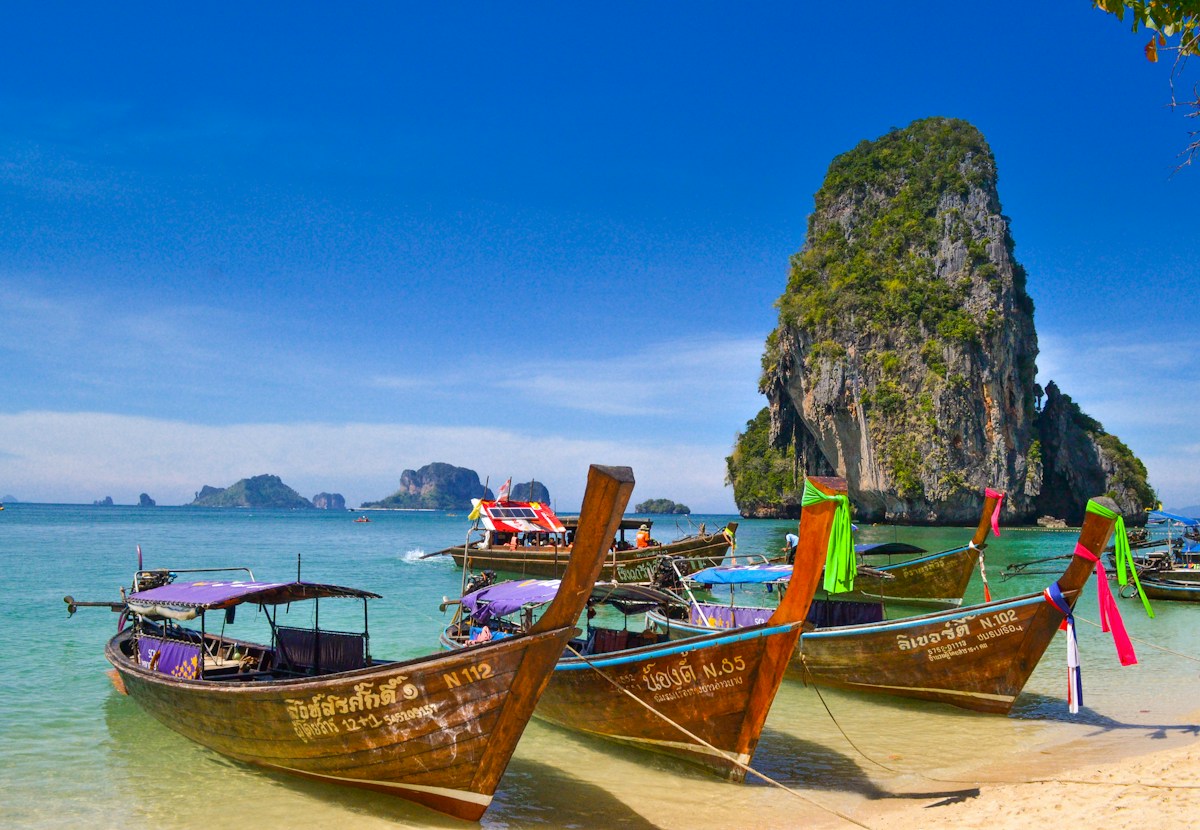
I spent a January in Railay Beach once, and yes, the limestone cliffs were spectacular, and yes, the sunsets were worthy of the Instagram assault they received. But the popular viewpoint to watch said sunsets was so crowded I spent the whole time trying not to get elbowed off a cliff. The $75-per-night room would have been $30 in September.
The trick with January is timing and location. Early January is slightly more expensive as New Year's celebrations continue, and Chinese New Year (if it falls in late January) creates another price spike. Mid to late January offers marginally better deals. And if you venture to less-tourist-heavy spots—lesser-known beaches, second-tier cities, or countryside areas—you'll find prices haven't inflated quite as drastically.
Costs: Expect to pay 40-60% above baseline prices. A comfortable mid-range hotel ($35 in shoulder season) will run $55-75. Flights into Thailand are at peak pricing, especially from Europe and North America. Budget on the higher end of any range you've researched.
The verdict: If you have only one chance to visit Thailand, if weather predictability is crucial (honeymoons, family trips with young kids), and if your budget can absorb premium prices, January delivers. Just book early, bring your patience for crowds, and maybe consider those less-traveled spots.
February: Peak Season's Graceful Exit
February holds onto January's weather perfection but with slightly less intensity on all fronts. The temperatures tick up a few degrees—still beautiful, just a hint warmer. The crowds thin out gradually as January's vacation period ends. And crucially, prices begin their descent, especially after mid-month.
I remember a February in Pai, that hippie mountain town north of Chiang Mai. The weather was ideal for renting a scooter and winding through the mountain curves to waterfalls and hot springs. The town was busy but not shoulder-to-shoulder like it would've been in January. My bungalow with a mountain view cost $28—still inflated, but the same place had been $42 in early January.
The weather remains cooperative throughout the country. Northern Thailand is still in its cool, dry period—perfect motorcycle weather, ideal hiking conditions, and those morning mists that make everyone suddenly fancy themselves a landscape photographer. Bangkok stays pleasant. The beaches and islands continue their excellent run, with calm Andaman Sea waters and clear Gulf of Thailand skies.
The one wildcard in February is Chinese New Year, which shifts dates each year based on the lunar calendar. When it falls in February (some years it's in late January), you'll see a noticeable surge in visitors, particularly in Bangkok, Phuket, Pattaya, and Chiang Mai—cities with significant Chinese tourism. Hotels in these spots will spike back toward January levels for that week. But book outside those specific dates, and you'll catch the beginning of the price slide.
Late February is particularly smart if you're flexible. You get 80-90% of January's weather perfection at 70-80% of January's prices. It's not a dramatic difference, but on a two-week trip, it might save you $200-300 in accommodation costs.
Costs: Still high but dropping. Expect 25-45% above baseline, with lower premiums after mid-month (unless Chinese New Year interferes). The $55-75 January hotel room drops to $45-65. Flights remain expensive but slightly more reasonable than January.
The verdict: February is January's more affordable younger sibling—most of the perks, less of the premium. If your dates are flexible, aim for late February to capture the weather while dodging peak pricing.
March: When the Heat Announces Itself
March is when Thailand stops apologizing for being a tropical country. The thermometer starts climbing with purpose. By mid-March, Bangkok feels like Bangkok again—which is to say, hot. Northern Thailand transitions from "bring a light jacket for evenings" to "why did I bring a jacket at all?" The southern islands stay comfortable thanks to sea breezes, but even there, you feel the shift.
I spent a March in Bangkok once, researching temple routes for a guidebook update. By noon each day, I understood viscerally why the traditional Thai schedule includes a long afternoon break. The heat wasn't unbearable—this is April's job—but it was definitely present, demanding respect, sunscreen, and frequent stops for cold drinks. The upside? The streets were noticeably quieter. The Grand Palace still had tourists, but the crowds had shrunk. My guesthouse, which had been fully booked through February, suddenly had vacancies and offered me a discount for booking a second week.
This is when you start seeing the value proposition shift. Weather is still good—it's hot, but it's dry hot, with mostly clear skies and little rain. Tourism infrastructure is fully operational. But prices begin dropping meaningfully, down 10-20% from peak season, and availability opens up. That beachfront room you couldn't get in January? It's available now, and cheaper.
Northern Thailand becomes a trickier proposition in March. This is when burning season begins—farmers in Thailand, Myanmar, and Laos burn fields to clear them for planting, and the smoke settles in the mountain valleys. Chiang Mai's air quality can deteriorate significantly, with AQI readings sometimes reaching unhealthy levels. Some years are worse than others, but if you have respiratory sensitivities or are planning a Northern Thailand focus, research the current conditions or consider other regions.
The islands remain excellent in March. The Andaman Sea is still calm and clear. The Gulf islands are transitioning from their slightly wetter season to their dry period. Koh Samui, Koh Phangan, and Koh Tao enter their sweet spot, with excellent weather and declining prices.
Costs: Dropping to 10-20% below peak season prices. That $55-75 January hotel room is now $40-55. Flights are more reasonable. Early shoulder season deals appear.
The verdict: March is underrated. If you can handle heat (and it's really not that bad, especially compared to April), you get good weather, diminishing crowds, and improving prices. Avoid Northern Thailand if air quality matters to you; focus on islands and coastal areas instead.
April: Songkran's Water-Soaked Chaos Meets Brutal Heat
April is a month of extremes. It's the hottest month of the year—genuinely, punishingly hot. Bangkok regularly hits 95-100°F (35-38°C) with humidity that makes the air feel solid. Chiang Mai can crack 104°F (40°C). Even the islands offer only marginal relief. This is the month when locals question your travel timing to your face.
But April is also Songkran, the Thai New Year water festival (April 13-15), and it's one of the most joyous, chaotic, soaking-wet cultural experiences Asia offers. I've done Songkran in Chiang Mai three times now. The first time, I thought I understood what "three-day water fight" meant. I didn't. Imagine every person on every street armed with water guns, buckets, hoses. Imagine motorcycles fitted with water cannons. Imagine surrendering to the fact that you'll be wet for 72 consecutive hours and just accepting it.
The heat makes Songkran perfect, actually. Getting drenched every five minutes feels like a blessing. The entire country pauses, floods back to hometowns, and parties. Families gather, temples overflow with people making merit, and the streets become massive water battlefields where everyone is both target and shooter. If you can visit Thailand only once and want a truly unique cultural experience, Songkran delivers.
But plan accordingly. During Songkran week (roughly April 10-16, as celebrations extend beyond the official dates), prices spike 50-100% in the major celebration cities—Chiang Mai, Bangkok, Phuket, and Pattaya especially. Hotels that are bargains the rest of April cost peak-season rates during the festival. And you must book 1-2 months ahead; procrastinators get shut out or pay premium rates.
Outside Songkran week, April is one of the cheapest months to visit Thailand—if you can handle the heat. Tourism drops to low levels. Hotels get desperate for occupancy and slash rates. That $65 peak-season room might be $28. Beaches are empty. Temples are quiet. You feel like you have the country to yourself, minus some locals wondering why you're traveling in the hot season.
The strategy: If you're visiting in April, either commit to Songkran fully (book early, embrace chaos, stay in a celebration epicenter) or avoid it entirely (visit early or late April, focus on islands with sea breezes, accept the heat as the price of solitude and savings).
Costs: Bargain basement except Songkran week. Outside the festival, expect 30-50% below peak prices—that $50 room drops to $25-35. During Songkran, prices jump back to peak season or higher in major cities.
The verdict: April is for heat-tolerant travelers chasing massive savings or culture-focused visitors ready for Songkran's wet madness. It's not a middle-ground month—it's extreme one way or another.
The first time I experienced Songkran in Chiang Mai's old city, I tried to "strategically" move between my guesthouse and restaurants during "quiet" periods. By day two, I realized there are no quiet periods. I bought a waterproof phone case, wore my swimming trunks all day, and surrendered. Best decision. The less you resist, the more fun it becomes. Just lock your valuables in a waterproof bag.
May: When the Rains Arrive and Prices Plummet
May is when Thailand's seasons shift dramatically. The first monsoon rains arrive, ending months of dry heat. I remember being in Bangkok when the season's first big storm rolled in—the temperature dropped 10 degrees in minutes, the rain came in sheets, and everyone on the street was smiling despite getting soaked. After brutal April, rain feels like redemption.
This is when low season officially begins, and with it, the massive price drops travelers dream about. Hotels that were $70 in January and $35 in April are now $25. Dive courses that cost $450 in peak season drop to $320. Tour operators start offering discounts. And the tourist crowds evaporate almost overnight.
The rain pattern is crucial to understand because "rainy season" scares people more than it should. In most of Thailand, May's rain comes as afternoon thunderstorms—heavy, dramatic, but short. You get a beautiful morning, lunch, and then around 2-4 PM, the sky opens up for 1-3 hours. Sometimes it's less, occasionally more. Then it clears, the sun comes back out, evening plans proceed normally. It's not typhoon-level storms (those come later, in September-October, and even then, rarely). It's predictable tropical rain.
I spent two weeks in Chiang Mai in May once, working remotely from cafes. Nearly every afternoon, I'd watch the storm roll in, order another coffee, and work through it. By 5 PM, the streets were drying, and I'd head out for dinner. The rain barely affected my plans—it just meant building in a siesta period, which felt very Thai anyway.
The Andaman coast (Phuket, Krabi, Phi Phi) starts seeing more rain in May. Seas get choppier, some boat tours get canceled, and it's less ideal for island hopping. But here's the secret weapon: the Gulf islands (Koh Samui, Koh Phangan, Koh Tao) are entering their best weather period. They run on the opposite monsoon pattern—their dry season is May through September. While western guidebooks lump all of Thailand into "monsoon season," savvy travelers are getting fantastic weather on the east coast at low season prices.
Some of the smaller Andaman islands start closing operations in May—certain resorts on Koh Lipe, some of the remote Similan Islands liveaboards. But the major destinations stay fully operational. Yes, you might have a rainy day or two, but you might also have a perfectly sunny week at half price.
Costs: True low season begins. Expect 30-45% below peak prices. Hotels offer long-stay discounts. Activities and tours negotiate.
The verdict: May is for smart travelers who understand Thailand's dual monsoon system. If you're heading to Andaman islands, acknowledge you might have rainy days but massive savings. If you're going to Gulf islands, you're catching excellent weather at bargain prices. Either way, you'll have Thailand largely to yourself.

June, July, August: The Deep Low Season
These three months are when Thailand tourism hits its nadir—and when the best deals appear. This is 40-50% off everything: hotels, flights, dive courses, cooking classes, even some restaurant prices drop. This is when that $70 January hotel room costs $30, when $150 domestic flights drop to $45, when you walk into highly-rated restaurants without reservations and choose your table.
But you earn those savings. The Andaman coast gets serious rain during these months. Phuket, Krabi, Phi Phi, Lanta—these islands see their heaviest rainfall, wettest conditions, and roughest seas. Some days you'll have beautiful weather. Other days, it'll rain for hours. Boat tours get canceled more frequently. That postcard-perfect longtail boat scene is harder to capture when the sea is gray and choppy.
I spent a July in Phuket once, staying at a beachfront resort in Kamala that was laughably empty. I was paying $42 a night for a room that cost $130 in December. The pool was empty most afternoons. The beach? I'd walk for twenty minutes and see maybe three other people. Yes, it rained. Most days, the afternoon storms were intense—wind, dramatic skies, the whole production. But most mornings were gorgeous, and I'd hit the beach at 7 AM, have it to myself, and be done before the afternoon rains arrived.
The pattern becomes familiar quickly: wake up to clear skies, maybe some morning clouds. Beautiful conditions until early afternoon. Storm builds between 1-3 PM. Heavy rain for 1-4 hours. Clears out, often with a stunning sunset. Some days this pattern breaks—sometimes it rains all day, sometimes it doesn't rain at all. But the stereotypical "monsoon season means constant rain" myth is false. It's more like "daily rain is likely, but so is daily sunshine."
The Gulf islands, meanwhile, are in their dry season prime. Koh Samui, Koh Phangan (home of the Full Moon Party), and Koh Tao (one of the world's cheapest places to learn to dive) enjoy their best weather June through September while costing a fraction of peak season prices. I got my Advanced Open Water certification in Koh Tao in June. The visibility was excellent, the dive boats weren't crowded, and the course was 30% cheaper than December prices.
Mainland destinations like Bangkok, Chiang Mai, and Ayutthaya are very doable in these months if you're flexible. Yes, it's rainy. Yes, it's humid. But the rain is manageable, you adapt quickly, and the trade-off is having major temples and attractions at fraction capacity. I visited Ayutthaya (the ancient capital ruins) in July on a Tuesday and counted maybe twenty people across the entire historical park. In January, there would've been thousands.
The real question is psychological: can you handle uncertainty? Peak season offers weather predictability—it will be good. Low season is a gamble—some days will be perfect, some will be wet, you won't know which until you wake up. If rigid plans stress you out, these months might not suit you. If you're adaptable and value massive savings over guaranteed sunshine, these are your months.
Costs: The absolute cheapest. 40-50% below peak, sometimes more. Everything is negotiable.
The verdict: For budget travelers, digital nomads staying long-term, or anyone who treats rain as a feature rather than a bug, June-August offers unbeatable value. Choose Gulf islands for best weather, or embrace the rain on the Andaman coast for epic savings and empty beaches.
If you're visiting Andaman islands (Phuket, Krabi, Phi Phi) in these months, build flexibility into your plans. Boat tours to popular spots like James Bond Island or the Phi Phi islands can be canceled due to rough seas. Have backup indoor activities ready—cooking classes, Thai massage courses, temple visits, museum days.
September: The Shoulder Season Secret
September doesn't look appealing on paper. It's still technically rainy season. The Andaman coast is still wet. Tourist numbers are still low. But that's exactly why September is brilliant—you still get all the low season price benefits, but the weather is noticeably improving from the July-August peak wetness.
I spent a September in Chiang Mai that converted me to shoulder season evangelism. It rained, sure, but less than I'd experienced in July. Mornings were beautiful. The city was empty—I walked into restaurants that require reservations in peak season and got tables immediately. I visited Doi Suthep, the mountain temple overlooking the city, on a Saturday afternoon and had it almost to myself. My apartment cost $380 for the entire month, and it was lovely—in a good neighborhood, fully furnished, with wifi strong enough for video calls.
The rainfall pattern is still afternoon-thunderstorm-based, but less intense and less reliable than July-August. You might have three rainy afternoons followed by two completely dry days. The unpredictability decreases slightly. And as the month progresses, you feel the shift toward high season—each week brings marginally better weather.
September is also when the Gulf islands start their transition. They're moving from dry season to their wetter period (which arrives November-January), but in September, they're still quite good—just slightly less perfect than June-August. You catch the tail end of great Gulf weather.
The smartest September move is positioning yourself for October and November. If you're doing long-term travel or working remotely, use September's rock-bottom prices for your base, then shift to beach destinations as October brings better weather. Or book your November accommodations in September before prices jump.
Costs: Still low season pricing—35-45% below peak. Hotels are eager for guests with high season approaching.
The verdict: September is for travelers who want low season savings but slightly better weather odds than July-August. It's a bridge month—still firmly in bargain territory but with one foot toward better conditions.
October: The Transition Month
October is Thailand in transition. The monsoon is losing its grip, but it hasn't fully released. The crowds haven't arrived yet, but they're coming. Prices are still low, but you can feel them preparing to jump. It's an in-between month, and those can be either frustrating or perfect depending on your perspective.
I spent an October on Koh Lanta, the quieter southern island that feels less developed than Phuket or Phi Phi. I had three days of rain and eight days of gorgeous weather. The beach was empty enough that my girlfriend and I debated whether we should wave to the only other couple we saw during our afternoon walks. Our beachfront bungalow cost $35 a night—the same place was $95 in January. Some restaurants were closed for low season, but enough were open that we never lacked options.
The weather pattern shifts dramatically during October. Early October can still feel very rainy, especially on the Andaman coast. But by late October, you're seeing more dry days than wet ones. The seas calm down. Boat tours resume regular schedules. The countryside is gorgeously green from months of rain. This is actually one of the prettiest times visually—everything is lush in a way it never gets during dry season.
The Gulf islands enter their wetter period in October. Not terrible, but their June-September dry run is ending. If you're planning Gulf island time, finish it by early October, then shift to Andaman destinations as that coast dries out.
Late October is smart strategy time. Tourist numbers are still low—most people planning Thailand trips aim for November through February, so October stays under the radar. But the weather is already improving, especially in the second half. You catch the beginning of good weather at the end of low-season pricing. That window—roughly October 20 through November 10—is my favorite value period of the year.
October also brings Vegetarian Festival (dates vary based on lunar calendar), primarily celebrated in Phuket with quite intense rituals including body piercing. And late October or early November brings Loy Krathong, Thailand's lantern festival, one of the most visually stunning events of the year. If you book your November trip in October, you lock in lower prices before the Loy Krathong rush.
Costs: Shoulder season sweet spot—25-35% below peak. Better than high season, not quite as cheap as deep low season.
The verdict: October rewards smart timing. Early October is essentially still low season with improving weather. Late October is the year's best value window—weather is mostly good, prices haven't jumped, crowds are minimal.
November: High Season's Return
November is when Thailand flips the switch back to prime time. The rains stop, the cool(er) air returns, and tourism surges back like a tide. I've been in Chiang Mai when this transition happens—it's remarkable how quickly things change. One week there are tables available everywhere, the streets are navigable, prices are reasonable. Two weeks later, everything is booked, prices have jumped, and you're making reservations.
The weather shift is equally dramatic. November brings back those crisp mornings, comfortable afternoons, and cool evenings that make Thailand feel perfect again. Northern Thailand emerges from the rainy season into its cool season prime—ideal motorcycle weather, perfect hiking conditions, and visibility that makes mountain vistas spectacular. Bangkok becomes pleasant again. The islands enter their postcard period, with calm seas and clear skies.
But November is tricky for timing. Early November is still shoulder season—prices are rising but haven't peaked, availability is good but tightening, weather is excellent and improving. This is a golden window, especially the first 10-12 days. By mid-November, and definitely after US Thanksgiving, high season pricing and crowds kick in fully.
Loy Krathong, the lantern festival where thousands of floating lanterns are released into the sky (in Chiang Mai's Yi Peng version) typically falls in November on the full moon. I experienced it in Chiang Mai once, and it's genuinely magical—the entire sky filled with glowing lanterns, rivers covered in floating offerings, temples lit up. But accommodation prices spike 50-100% during the festival week, and you need to book months ahead. If you're not specifically going for Loy Krathong, avoid Chiang Mai that week and watch prices drop.
November is when booking strategy matters most. Book early November immediately—it's still relatively affordable and you lock in rates. For late November, if you must go then, book as far ahead as possible and expect to pay high season rates.
Costs: Rising fast. Early November is 15-25% below peak. Late November is approaching full peak pricing.
The verdict: November is a race—early month is brilliant value for excellent weather, late month is expensive but perfect conditions. Your timing within November matters more than almost any other month.

December: Peak Season Peak
December is Thailand at its most expensive and its most crowded, for good reason—the weather is objectively the best of the entire year. I spent a December 23-January 2 holiday period in Thailand once, and I understood why prices were absurd. The weather was so consistently perfect it felt fake. Cool mornings, warm but not hot days, comfortable evenings, zero rain, low humidity. Every day was t-shirt-and-shorts perfect.
Northern Thailand is at its coolest—Chiang Mai mornings can actually be chilly (50s°F/12-15°C), and mountains like Doi Inthanon might need a light jacket. Bangkok is as comfortable as it ever gets, with pleasant walking weather and outdoor dining that doesn't leave you drenched in sweat. The islands are in peak form, with calm Andaman seas perfect for diving and snorkeling.
But you pay handsomely for this perfection, especially Christmas week through New Year's. I watched hotel prices triple between December 1 and December 23. That $50-per-night room became $150. Beachfront bungalows hit $200+ per night. Even hostels doubled their rates. And it's not just accommodation—flights spike, tours charge premium rates, and popular restaurants raise prices for the holiday season.
The crowds match the prices. December 20 through January 5 is the single busiest period of Thailand's entire year. Everyone with Christmas vacation time shows up simultaneously—European families, American honeymooners, Australian backpackers, Chinese tour groups. Popular beaches like Railay or Maya Bay are packed. Phi Phi's viewpoint becomes a shuffling line of selfie-takers. Temples in Chiang Mai's old city feel like theme parks.
The smart December strategy is to go early month if possible. December 1-15 has the same excellent weather but 30-40% lower prices than the holiday weeks. You avoid the Christmas/New Year chaos. Booking is easier. It's still high season, so it's not cheap, but it's manageable rather than shocking.
If you must travel during Christmas/New Year, accept the premium pricing as inevitable, book 2-3 months ahead minimum, and consider less-touristed destinations. Skip Phuket for Koh Lanta, skip Chiang Mai for Pai or Chiang Rai, skip Bangkok's tourist areas for the less-visited neighborhoods. You'll still pay more than usual, but you might avoid paying three times more.
Costs: Maximum prices, especially Christmas/New Year week. Expect 50-80% above baseline, with holiday weeks hitting 100-200% above baseline. That $35 shoulder season room is $60-90 in early December, $100-140 Christmas week.
The verdict: December offers Thailand's best weather and worst prices. If budget matters, avoid the holiday weeks like they're cursed. If weather certainty is crucial and money is flexible, December delivers perfection—just book early and prepare for company.
Regional Variations: The Thailand You Visit Depends on When You Go
Here's what most month-by-month guides miss: Thailand isn't one weather zone. The northern mountains, central plains, Andaman coast, and Gulf coast all run on different patterns. You can have perfect weather somewhere in Thailand every month of the year if you know where to look.
Bangkok and Central Thailand follow the clearest pattern: cool/dry November-February, hot March-May, rainy June-October. This is the textbook version. But even in rainy season, Bangkok is manageable—it's not monsoon chaos, just afternoon storms.
Northern Thailand (Chiang Mai, Pai, Chiang Rai) has that same basic pattern but more extreme. Cool season is genuinely cool—morning fog, evening bonfires, tea plantations in mist. Hot season is brutal. And rainy season is very wet, especially in September-October. Plus, burning season (March-April) adds the air quality complication.
The Andaman Coast (Phuket, Krabi, Phi Phi, Lanta) has the most dramatic monsoon. November through April is pristine—calm seas, clear skies, perfect beach weather. May sees the shift, and June through October brings heavy rain, rough seas, and canceled boat tours. This coast is incredible in high season and challenging in low season.
The Gulf Islands (Koh Samui, Koh Phangan, Koh Tao) run backwards. Their worst weather is November-January when the Andaman coast is perfect. Their best weather is March-September when guidebooks say it's "monsoon season." This opposite pattern is the secret weapon—when everyone's avoiding Thailand for "bad weather," the Gulf islands are sunny.
I used this pattern brilliantly one year: I spent June-August in Koh Tao getting dive certifications (perfect weather, cheap prices), then shifted to Chiang Mai for September-October (manageable rain, empty temples, low costs), then hit the Andaman islands in late November (just as good weather returned but before peak pricing). I basically followed good weather and low prices around the country.
The Bottom Line: Choosing Your Thailand Season
After all these months, all these visits, here's what I've learned: there's no "best" month for Thailand. There's only the best month for your specific priorities.
If you're optimizing for weather above all else: November through February, with January and December leading the pack. You'll pay premium prices and fight crowds, but the weather complaints will be zero. This is the safe choice, the honeymoon choice, the "I have one shot at Thailand and can't risk rain" choice.
If you're optimizing for value: June through August offers the absolute lowest prices—40-50% below peak. You'll navigate rain, but you'll have Thailand largely to yourself and save enough money to extend your trip by weeks. September and May bracket this period with marginally better weather and marginally higher (but still low) prices.
If you're optimizing for balance: Late October and early November offer the sweet spot—weather is good and improving, prices are reasonable and rising, crowds are minimal and growing. This is the experienced traveler's window, the "I've done my research" period. March also works here—still good weather, dropping prices, thinning crowds.
If you're chasing specific experiences: Go when they happen. Songkran (mid-April) is worth the heat. Loy Krathong (November full moon) is worth the peak prices. Full Moon Party (monthly, but best in good weather) is better in low season when it's less crowded. Diving is cheapest June-August in Koh Tao.
If you're flexible and smart: Use the regional variations. Visit Gulf islands May-September when they're perfect and cheap. Visit Andaman destinations November-April when they're pristine. Split your trip between regions, following good weather.
My personal approach after all these years? I visit Thailand in shoulder seasons—late October, early November, late March, and occasionally May. I get 70-80% of peak season's weather perfection at 50-60% of the price. I bring an umbrella and sunscreen, stay flexible, book less in advance, and let the trip unfold. Some days are rainy, some are perfect, but that's true of travel anywhere.
The worst approach is the one I see most often: people read "November through February is best," then blindly book Christmas week in Phuket, pay $150 per night for a mediocre hotel, fight crowds for everything, and leave thinking Thailand is expensive. They could've had nearly identical weather in early December or late November at half the price.
Thailand's rhythm is knowable. The weather patterns are predictable. The pricing follows tourism like clockwork. Once you understand the year's flow—cool season's perfection and premiums, hot season's heat and bargains, rainy season's afternoon storms and empty beaches—you can time your visit to match what you actually want from Thailand.
For me, that's often a quiet guesthouse during afternoon rain, an empty temple in morning mist, a beach with more sand than people, and money left over to stay another week. But your Thailand might be different. And that's the beauty of a country with twelve different personalities to choose from.
Ready to plan your trip around your perfect month? Use our budget calculator to see exactly what your chosen dates will cost, then book with confidence knowing what you're gaining and what you're trading away.
Continue Reading

Thailand Rainy Season: Is It Worth Visiting? (Honest Guide)
50% cheaper hotels, empty beaches, and it doesn't rain as much as you think. Here's the truth about visiting Thailand in monsoon season.

Thailand Packing List: What to Bring vs Buy There (2025)
After seven trips and countless packing mistakes, I've learned the hard truth: you need half what you think. Here's the real story of what to pack, what to skip, and what's actually cheaper to buy in Thailand.

Best Time to Book Thailand Flights: Save $100-400 (2025 Guide)
The flight booking strategies I wish someone had told me before my first Thailand trip. Real stories, price discoveries, and the timing tricks that saved me hundreds.