
10 Hidden Gems in Thailand Most Tourists Miss (2025)
This post contains affiliate links. We may earn a commission at no extra cost to you. Full disclosure
I'll never forget the moment I realized Thailand's most famous destinations had lost their magic. Standing shoulder-to-shoulder with three hundred other tourists on Maya Bay, all of us trying to capture the same Instagram shot, I thought: there has to be more to this country than this.
Turns out, there is. Much more. Over ten years of exploration, I've discovered Thailand's secret places—destinations that deliver that breathless "wow" feeling without the crowds, without the inflated tourist prices, and without the sense that you're just another body in a never-ending parade of selfie-takers.
These are the places where locals still seem genuinely curious about where you're from. Where you might be the only foreigner on the beach. Where the magic of discovery still exists.
Here are ten hidden gems that most tourists never find.
Koh Lipe: Thailand's Secret Maldives
I stumbled upon Koh Lipe by accident, actually. Sitting in a dive shop in Koh Lanta, I overheard two backpackers comparing photos of the most impossibly turquoise water I'd ever seen. "Where is that?" I interrupted. They looked at each other and smiled. "If we tell you, you have to promise to go."
I promised. And three days later, after two ferry connections and a speedboat ride that felt like it was taking me to the edge of the world, I understood why they'd smiled.
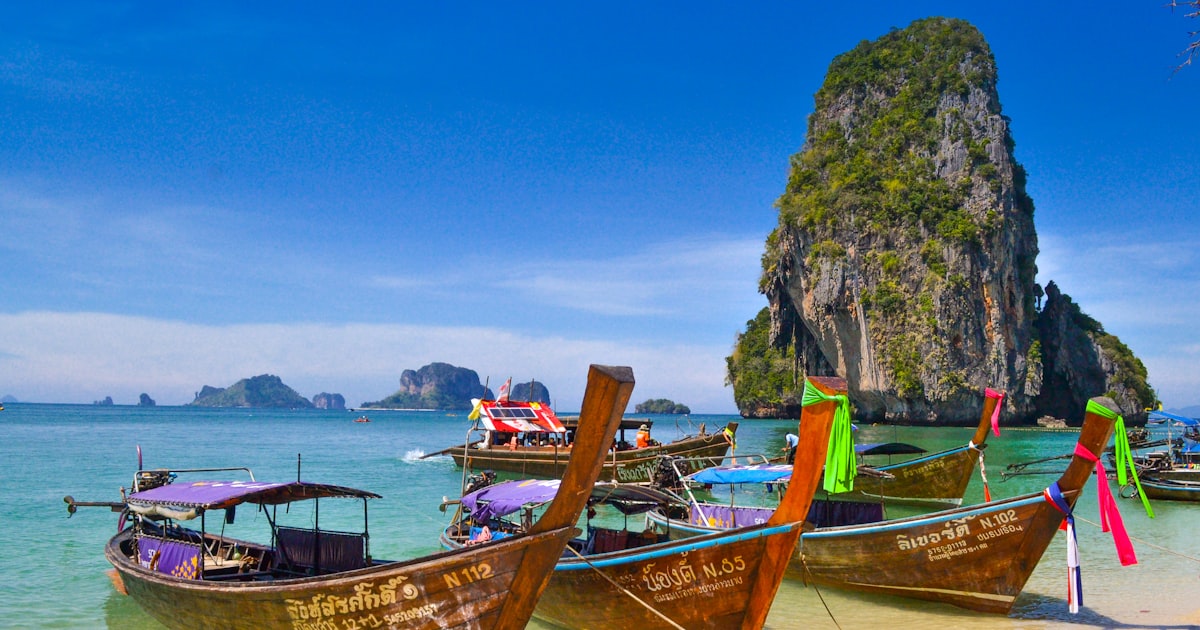
Koh Lipe sits so far south in Thailand that you can practically see Malaysia from the beach. The water is that crystalline blue you usually see in heavily Photoshopped travel ads—except here it's real. Powdery white sand squeaks under your feet. Snorkel fifteen feet from shore and you're swimming with blacktip reef sharks and sea turtles.
The locals call it the "Maldives of Thailand," and they're not exaggerating. But unlike the Maldives, you can stay here for $30-60 a night instead of $500+. Walk down Walking Street at sunset and the smell of grilling fish mixes with salt air while fire dancers practice their routines on the beach. By day, the beaches are remarkably empty—most tourists simply don't make the journey.
There's a catch, of course. Koh Lipe is completely closed from May to October when the monsoons make the crossing dangerous. And getting here takes commitment: six to eight hours from Bangkok involving a flight, a minibus, and that final speedboat across open water. But that inconvenience is exactly what keeps this place special.
Getting there: Fly to Hat Yai, take the minibus to Pak Bara pier, then speedboat (1.5 hours). Go November through April only.
Budget: Expect $25-60 for accommodation, $8-15 daily for food, and around $15-25 for snorkeling trips to nearby islands.
Insider tip: Stay on Walking Street if you want action and beach bars, or Sunrise Beach if you prefer peace and that incredible sunrise over the Andaman Sea.
Pai: The Mountain Town That Time Forgot
The taxi driver looked at me like I was crazy. "You know it's 762 curves, right?" he said, referring to the mountain road from Chiang Mai to Pai. "Most foreigners get sick."
I'd heard the warnings. The internet is full of stories about people vomiting into plastic bags on the three-hour journey up to this remote mountain town. But the backpackers I'd met in Chiang Mai spoke about Pai with a dreamy, faraway look in their eyes. I had to see what the fuss was about.
Those 762 curves turned out to be completely worth it. Pai is unlike anywhere else in Thailand—a sleepy hippie haven surrounded by mist-covered mountains, where the pace of life slows to something approaching horizontal. The whole town smells like jasmine and wood smoke. Reggae drifts from open-air bars. Travelers stay for "just a few days" and leave three weeks later, sun-bleached and reluctant.
I rented a scooter for $5 and spent my days chasing waterfalls and canyon views. The Pai Canyon at sunset might be the most stunning sight in northern Thailand—an impossibly narrow ridge of rock where you can watch the whole valley turn gold. Nearby, the Tha Pai Hot Springs bubble up in the middle of the jungle, and you can sit in naturally heated pools surrounded by bamboo while the forest hums around you.
In the evenings, Pai's walking street comes alive. Locals sell handmade crafts, musicians perform under string lights, and you can eat incredible pad thai for less than $2. The vibe is relaxed, creative, and refreshingly uncommercial. This is Thailand before mass tourism—when travelers actually talked to each other instead of just posting stories.
Getting there: Three-hour drive from Chiang Mai (take motion sickness pills if you're prone).
Budget: Bungalows with mountain views run $12-25 per night. Scooter rental is essential at $5-6 daily. Food and activities average $15-25 per day.
Insider tip: Stay at least four nights. One day to recover from the journey, three more to actually explore. Most people leave too soon and regret it.
Koh Mak: The Island That Said No to Development
A fisherman on Koh Chang told me about Koh Mak. "It's what this island used to be," he said with a touch of sadness, gesturing at the mega-resorts that now dominate Koh Chang's coastline. "Before the developers came."
Koh Mak deliberately limited development. There are no 7-Elevens, no beach clubs blasting EDM, no Full Moon Parties. What there is: quiet beaches, authentic island life, and the feeling that you've somehow traveled back in time to the Thailand your parents might have visited.
The island is small enough to bicycle around in an afternoon. I pedaled along red dirt roads that cut through rubber plantations and coconut groves, past weathered wooden houses where grandmothers waved from porches. Ao Kao beach—one of the prettiest stretches of sand I've seen in Thailand—was completely empty. Just me, turquoise water, and the sound of wind in the palms.
This is a place for people escaping the party islands. Couples read books under beach umbrellas. Families build sandcastles. Nobody is trying to sell you anything. The pace is so slow it's almost meditative. You eat dinner wherever you're staying because there aren't many restaurants. You go to bed when it gets dark because there's no real nightlife.
It sounds boring, but it's actually profound. In a country that's been thoroughly discovered, Koh Mak remains genuinely peaceful.
Getting there: Ferry from Trat (same jumping-off point as Koh Chang, different direction).
Budget: All-in daily costs run $30-60 including accommodation, food, and bicycle or scooter rental.
Insider tip: Don't expect luxury or excitement. Expect authentic island life and beaches you might have entirely to yourself.
The Mae Hong Son Loop: Thailand's Greatest Road Trip
"You've done some motorcycle riding before, right?" the rental shop owner asked skeptically, eyeing me and my friend.
We nodded confidently, though our combined riding experience was maybe three days in Pai. He didn't look convinced, but he handed over the keys anyway. "Four thousand curves," he said. "Don't rush it."
The Mae Hong Son Loop is legendary among riders—600 kilometers of mountain roads that wind through landscapes that don't even look like Thailand. Pine forests. Morning fog so thick you can barely see the road. Hill tribe villages perched on impossible slopes. Temples that emerge from the mist like something from a fantasy novel.
We spent five days threading through mountains, following the loop from Chiang Mai through Pai, up to Mae Hong Son, down through Mae Sariang, and back. Every curve revealed something new: a waterfall cascading down a cliff face, a roadside coffee stand with views over three valleys, a cave temple where monks meditate in candlelight.
The riding was challenging—hours of concentration, arms aching from the constant turns, legs cramping from gripping the bike. But it was also the most exhilarating experience I've had in Thailand. You're utterly present, completely focused, moving through landscapes of staggering beauty at the perfect speed to actually see them.
In tiny mountain towns, we stayed in guesthouses where the owners seemed genuinely delighted to have guests. We ate dinner at restaurants with no English menus, pointing at whatever looked good. We sat in hot springs under stars so bright it looked like someone had spilled glitter across the sky.
The route: Chiang Mai → Pai → Mae Hong Son → Mae Sariang → Chiang Mai. Allow 4-5 days minimum.
Budget: Motorcycle rental ($8-15/day), basic accommodation in mountain towns ($15-30/night), fuel for the entire loop ($10-15). Total for five days: $200-300.
Insider tip: Go counter-clockwise (via Mae Sariang first). You'll tackle the toughest sections when you're fresh, and you'll have Pai at the end as a reward.
Khao Sok National Park: Jurrasic Park Is Real
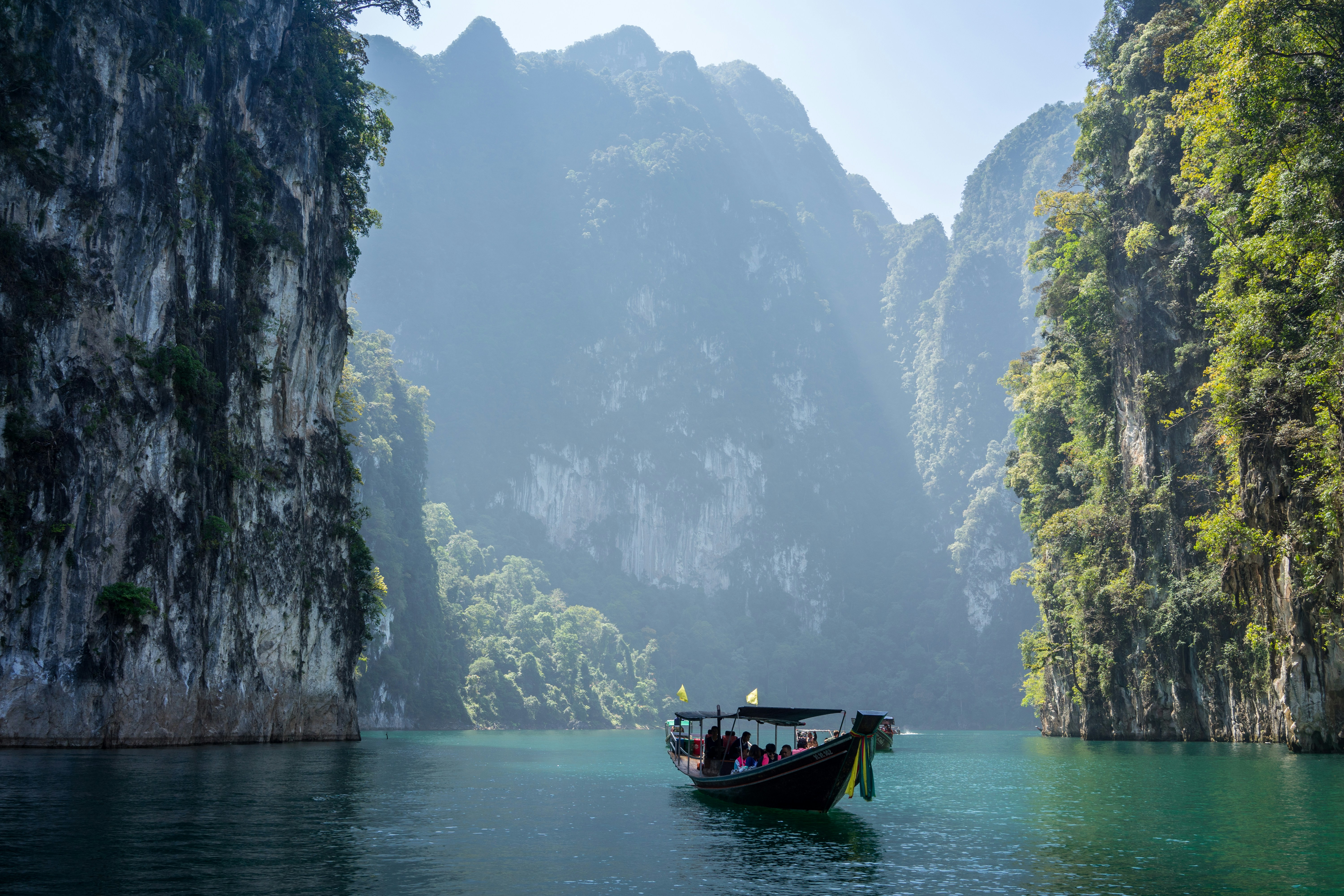
The longtail boat cut its engine, and suddenly the only sound was water dripping from the boatman's paddle. We drifted on an emerald lake surrounded by limestone karsts that shot up like prehistoric teeth. Mist clung to the jungle canopy. A hornbill's call echoed across the water.
"This forest is older than the Amazon," our guide whispered, as if speaking too loudly might break the spell. "One hundred sixty million years."
Khao Sok National Park is Thailand's ancient heart—a rainforest so old, so dense, so impossibly lush that you feel like you've stumbled onto the set of Jurassic Park. The limestone cliffs are draped in hanging vines. Massive buttress trees spread their roots across the forest floor. The air itself feels alive, thick with moisture and the calls of gibbons.
The crown jewel is Cheow Lan Lake, where floating bungalows sit on the water like something from a fever dream. You sleep in a wooden room that gently rocks with the wake of passing boats. You fall asleep to the sound of jungle—insects, night birds, the occasional splash of a fish. You wake up as mist rises from the lake, and the karsts emerge from the fog like islands appearing from nothing.
I spent two days on the lake. We swam in water so clear you could see twenty feet down. We kayaked into hidden coves where macaques watched us from the trees. We trekked through jungle with a guide who identified plants by smell and showed us tracks from wild elephants.
Most tourists are on their way to beaches and never stop here. That's their loss. Khao Sok is the Thailand that existed before humans—raw, wild, and staggeringly beautiful.
Getting there: 2-3 hours from Phuket or Surat Thani. Most people stop here between Bangkok and the islands.
Budget: Floating bungalows run $50-100 per night (includes meals and boat transfers). Park entrance and guided jungle treks add $25-40. Budget guesthouses near the entrance cost $15-25/night.
Insider tip: Do two nights on the floating bungalows if you can. The first night you're adjusting. The second night you actually relax enough to absorb the magic.
Sangkhlaburi: Where Tourism Hasn't Arrived
The bus driver announced we'd arrived in Sangkhlaburi at 2 AM. I stumbled off into darkness, confused. Where were the hotels? The restaurants? The familiar glow of tourist infrastructure?
A motorcycle taxi driver materialized from the shadows. "Guest house?" he asked in broken English. Twenty minutes later, I was in a wooden room overlooking a vast lake, still not entirely sure where I was.
At dawn, I understood. Sangkhlaburi sits in far western Thailand, pressed against the Myanmar border, in a landscape of mountains and water. The town's centerpiece is Mon Bridge—the longest wooden bridge in Thailand—stretching 850 meters across the reservoir like something from another century.
I woke at 5:30 AM and walked down to the bridge. Mist rose from the water. And then they came: dozens of monks in saffron robes, walking single-file across the ancient wooden planks to collect alms from villagers waiting on the other side. The only sounds were footsteps, the creak of wood, and birds welcoming the morning.
This is Thailand before tourism arrived. There are no English menus. No souvenir shops. No other foreigners for days at a time. Just Mon and Karen culture, a sunken temple that emerges when the reservoir is low, and a sense that you've found something special precisely because you're not supposed to be looking for it.
The local guest house owner seemed genuinely puzzled about what I'd come to see. "There's nothing here," she said. But that was the point. Sometimes nothing is everything.
Getting there: 7-8 hour bus from Bangkok, or 3-4 hours from Kanchanaburi.
Budget: Shockingly cheap. Total daily costs around $20-35 for accommodation, food, and wandering.
Insider tip: Visit Wat Wang Wiwekaram, the "sunken temple" that's partially submerged in the reservoir. It's hauntingly beautiful, especially at sunset.
Koh Yao Noi: Phang Nga Bay Without the Tourists
I was sitting in a beach bar on Phuket, watching fire dancers perform for a crowd of hundreds, when I met a German couple who'd just come from Koh Yao Noi.
"Same bay," the woman said, gesturing at the limestone karsts visible across the water. "Same views of the karsts. But on Yao Noi, we were the only people on the beach."
Phuket receives nine million tourists per year. Koh Yao Noi, sitting right in the middle of the same bay, gets maybe 50,000. It's one of the most absurd disparities in Thailand—same scenery, vastly different experience.
I took the ferry over the next morning. Thirty minutes later, I was on a Muslim fishing island where life still revolves around prayer times and the fishing catch. I rented a scooter and spent the day finding empty beaches, rubber plantations, and viewpoints where I could see James Bond Island in the distance without the armada of tour boats that usually surround it.
The island is lush and green, with the famous Phang Nga Bay karsts providing a stunning backdrop to everything. But unlike Phuket or Krabi, this is still a working island. Fishermen repair nets on the beach. Kids play soccer in village squares. Tourism exists but doesn't dominate.
I stayed on the east side to catch sunrise over the karsts—one of those views that stops you mid-coffee, golden light turning the limestone pillars pink and orange. The only sounds were roosters and the call to prayer drifting across the water.
Getting there: 30-minute ferry from either Phuket or Krabi.
Budget: Slightly higher than other hidden gems due to limited development: $40-80 daily for accommodation, food, and scooter rental.
Insider tip: Rent a scooter and explore. You'll find beaches with literally nobody on them—something increasingly rare in southern Thailand.
Trang Islands: The Andaman's Best-Kept Secret
"You want to go where?" The booking agent in Krabi looked confused. "Why not Phi Phi? Much easier."
I showed her photos of the Emerald Cave—a hidden lagoon accessible only by swimming through a pitch-black cave tunnel. "I want to go here."
She shrugged and printed my ticket to Trang.
The Trang Islands—Koh Mook, Koh Kradan, Koh Ngai—are everything the famous Phi Phi Islands used to be before Instagram destroyed them. Crystal water. Dramatic limestone cliffs. World-class snorkeling. But here, you're sharing the beach with maybe twenty people instead of two thousand.
The highlight of the Trang archipelago is the Emerald Cave on Koh Mook. You swim into darkness—an 80-meter tunnel through solid limestone where you can't see your hand in front of your face. The guide tells you to keep swimming. Your brain screams that this is insane. And then suddenly you emerge into a hidden lagoon, completely enclosed by towering cliffs, open to the sky above, glowing that impossible emerald green that gives the cave its name.
It felt like discovering a secret—which, really, it still is. Despite being one of Thailand's most magical natural wonders, the Emerald Cave sees a fraction of the tourists that pour into more accessible destinations.
Koh Kradan offers the best beaches—powdery white sand and water so clear that boats look like they're floating on air. Koh Ngai is perfect for snorkeling, with house reefs right off the beach. And Koh Mook has the most character—a Muslim fishing village where kids play soccer on the beach and travelers gather at sunset.
Getting there: Fly to Trang, then ferry from Hat Yao pier. Season is November to April.
Budget: Koh Mook accommodations run $20-40/night (local vibe), Koh Kradan is pricier at $40-100 (limited options, best beaches), and Koh Ngai falls in between at $30-80.
Insider tip: Island-hop between them. Ferries connect the islands, and each has its own character worth experiencing.
Chiang Rai Province: Beyond the Temple Selfie
Every day, dozens of tour buses arrive at Chiang Rai's White Temple, disgorge hundreds of tourists for forty-five minutes of frantic photo-taking, then disappear back to Chiang Mai. I watched this happen three times while having coffee at a nearby café.
What none of those tourists saw: the entire rest of Chiang Rai Province, which might be the most underrated destination in northern Thailand.
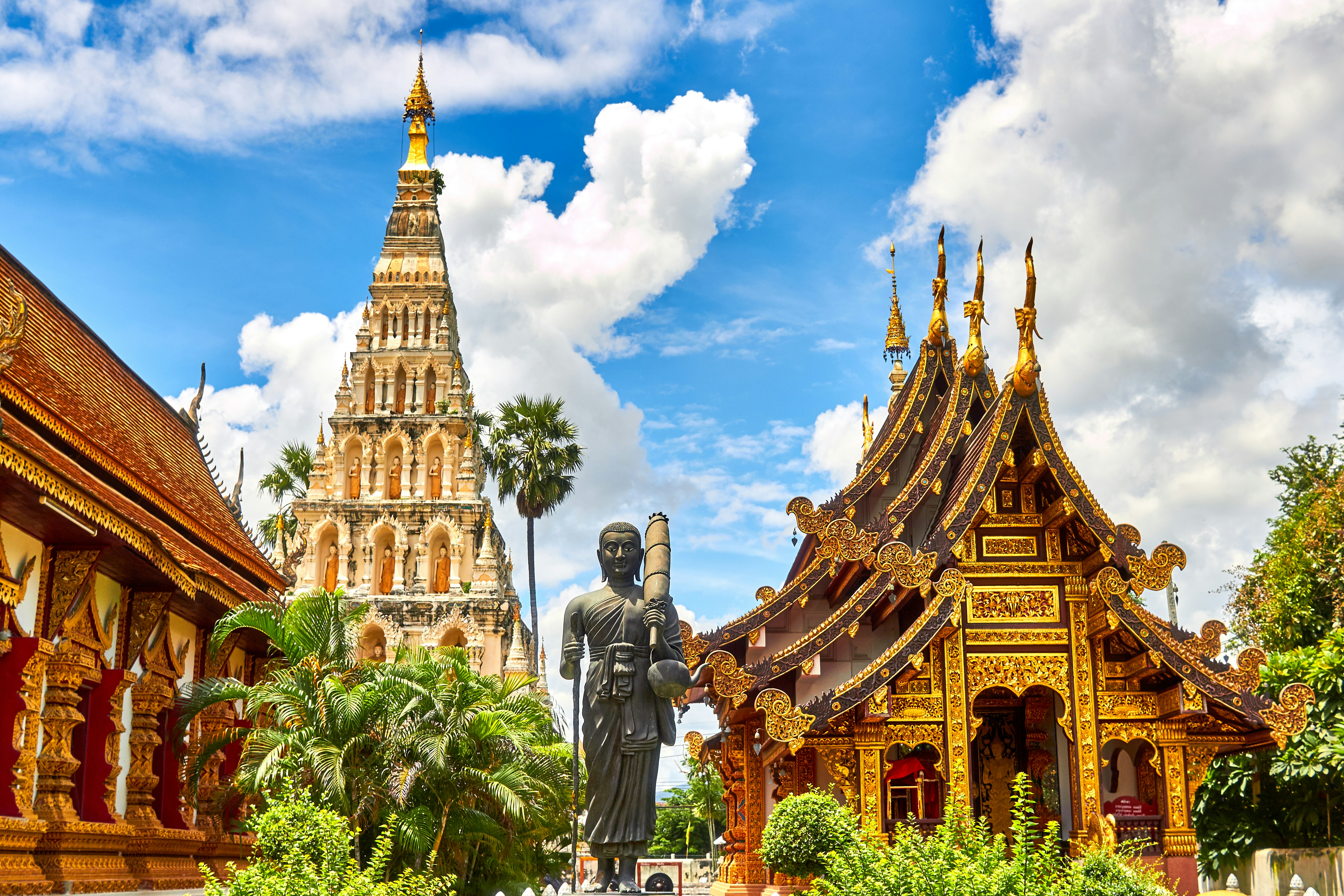
I spent four days exploring the area, and barely scratched the surface. The Blue Temple (Wat Rong Suea Ten) is newer and arguably more stunning than its famous white cousin—deep indigo interior with golden murals and a giant white Buddha that seems to glow. There were six people there when I visited. Six.
The Black House (Baan Dam) is stranger still—a collection of dark wooden buildings filled with animal bones, pelts, and provocative art created by a Thai artist who clearly had some things to work through. It's bizarre, uncomfortable, and unlike anything else in Thailand.
But the real discovery was the countryside. I rented a car and drove up to Doi Tung, a mountain area near the Myanmar border where the royal family established gardens and a villa. The views from up there—mist-covered mountains stretching to the horizon, hill tribe villages, tea plantations—made me wonder why anyone bothers with the tourist circus in Chiang Mai.
The Golden Triangle, where Thailand, Laos, and Myanmar meet at the Mekong River, has a surreal border-town energy. You can stand on the riverbank and see three countries at once, watch boats smuggling who-knows-what across the water, and feel like you're witnessing something most tourists never see.
Getting there: 3-hour drive from Chiang Mai, or fly directly to Chiang Rai.
Budget: Surprisingly cheap—$35-50 per day covers accommodation, food, and transport. Less touristy than Chiang Mai means better prices.
Insider tip: Rent a car, not a scooter. The province is spread out and the best viewpoints are hard to reach on two wheels.
Kanchanaburi: More Than Just a Bridge
I'd come to Kanchanaburi to see the famous bridge—the one from the movie, the railway that prisoners of war built under Japanese occupation during World War II. I spent an hour there, sobered by the history, then asked my guest house owner: "What else should I see?"
She smiled. "How many days do you have?"
Turns out, the bridge is just the beginning. Kanchanaburi Province is enormous, packed with waterfalls, caves, floating hotels, and jungle that most day-trippers from Bangkok never discover.
I started with Erawan Falls—a seven-tier waterfall that climbs through the jungle like a natural staircase. Turquoise pools at each level, fish that nibble at your feet, jungle canopy overhead. I went early to beat the crowds and had the upper tiers almost entirely to myself, swimming in water so clear I could count stones on the bottom.
Hellfire Pass, a cutting through solid rock that prisoners carved by hand, was harder to process. The museum there tells the story with almost unbearable detail—the starvation, the disease, the cruelty. Walking through the pass where thousands died felt like trespassing on a grave.
But there's also beauty here. The floating raft houses on the River Kwai are exactly what they sound like—wooden bungalows built on bamboo rafts, tied to the riverbank, gently rocking with the current. I spent a night in one, swimming in the river, watching fireflies emerge at dusk, and feeling like I'd discovered Thailand's most unique accommodation.
Getting there: 3-hour bus or train from Bangkok. Perfect for a multi-day stop between Bangkok and southern destinations.
Budget: Floating raft houses run $30-60/night. Erawan Falls entry is $10. Scooter rental for exploring costs $6-10/day. Very affordable for how much there is to see.
Insider tip: Visit Erawan Falls at 8 AM when it opens, or after 2 PM when the Bangkok day-trippers leave. The difference is night and day.
The Real Secret to Thailand's Hidden Gems
Here's what I learned after finding all these places: They're not actually hidden. Locals know about them. Some tourists go there. They're on maps, accessible by public transport, perfectly safe to visit.
What keeps them "hidden" is inconvenience. The extra ferry connection. The winding road that makes half the passengers sick. The lack of direct flights. The missing Instagram hashtag with millions of posts.
But here's the thing—that inconvenience IS the point. It filters out everyone who wants Thailand to be easy, who wants the package tour with air-conditioning and English menus and guaranteed good weather. What's left are the travelers willing to work a little harder for something authentic.
In Koh Lipe, I chatted with a beach restaurant owner who'd been there twenty years. "Before, only divers came," he said. "Now more tourists, but still not too many. The journey keeps it special."
He was right. Every extra hour of travel time, every missed connection, every moment of wondering if you made a mistake—they're all worth it when you finally arrive and realize you've found something real.
The Thailand in these places isn't performing for tourists. It's just being itself. And that's worth every inconvenient curve in the road.
Ready to plan your own hidden gems adventure? Use our budget calculator to estimate costs for your custom off-the-beaten-path Thailand itinerary.
Continue Reading

Thailand Packing List: What to Bring vs Buy There (2025)
After seven trips and countless packing mistakes, I've learned the hard truth: you need half what you think. Here's the real story of what to pack, what to skip, and what's actually cheaper to buy in Thailand.

Thailand Rainy Season: Is It Worth Visiting? (Honest Guide)
50% cheaper hotels, empty beaches, and it doesn't rain as much as you think. Here's the truth about visiting Thailand in monsoon season.

Best Time to Book Thailand Flights: Save $100-400 (2025 Guide)
The flight booking strategies I wish someone had told me before my first Thailand trip. Real stories, price discoveries, and the timing tricks that saved me hundreds.