
Chiang Mai vs Bangkok: Where to Base Yourself
This post contains affiliate links. We may earn a commission at no extra cost to you. Full disclosure
Chiang Mai vs Bangkok: Where to Base Yourself
After splitting my time between these two incredible cities for a decade, I've learned that choosing between them isn't just about cost or convenience - it's about understanding which rhythm matches your soul. One will energize you, the other might exhaust you. The trick is knowing which is which before you commit.
The question hits my inbox at least once a week: "Should I go to Bangkok or Chiang Mai?" And every time, I want to grab the person by the shoulders and say: "It depends on who you are when you wake up in the morning."
Because here's the truth - these two cities aren't just geographically distant. They're different universes operating under the same tropical sun, each with its own gravitational pull that attracts certain types of souls while repelling others.
Bangkok is the friend who texts you at midnight with an adventure. Chiang Mai is the one who invites you for sunrise yoga and actually follows through. Bangkok is three-day benders and spontaneous business deals in rooftop bars. Chiang Mai is productive mornings in cafes and weekend hikes to hidden waterfalls. Bangkok costs you money but opens doors. Chiang Mai saves you money and gives you space to think.
After ten years of bouncing between them, running my business from both cities, making friends in both places, and watching hundreds of expats and digital nomads make this choice, I've seen patterns emerge. Not rules, exactly, but tendencies. And I've learned that the people who love one city often merely tolerate the other.
Let me walk you through what it's actually like to live in each place, not through bullet points and statistics, but through the daily rhythms that define life in these two remarkable cities.
The Bangkok Morning
Your alarm goes off at 7 AM in your Sukhumvit apartment. Not because you're a morning person, but because if you don't leave by 7:30, your 20-minute BTS commute becomes a sardine-can experience that sets the wrong tone for the entire day. You've learned this the hard way.
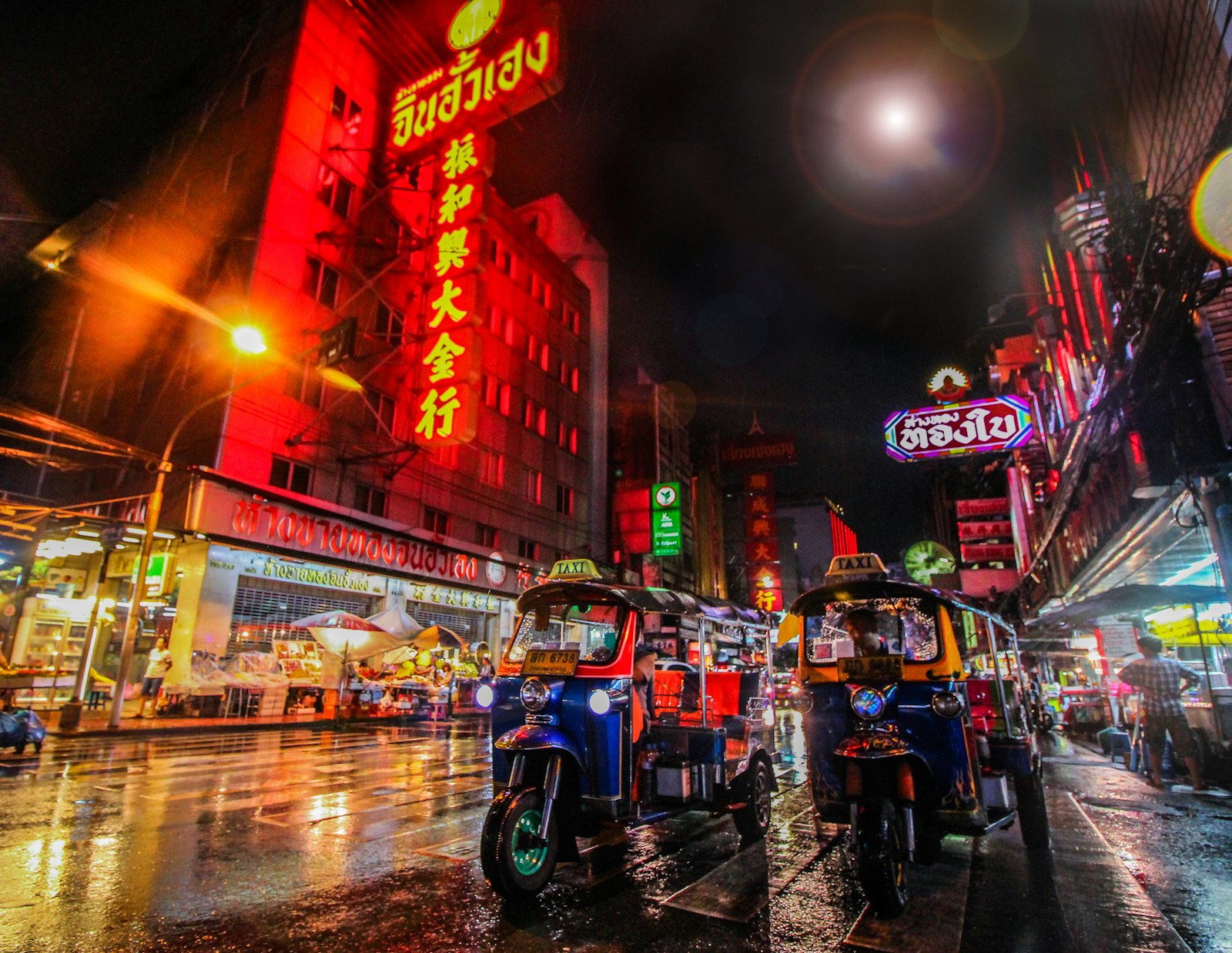
The city is already moving. Below your 15th-floor window, the street vendors are setting up their carts - the same woman who makes the incredible pad krapow gai every single day, positioned at the same corner, her wok already smoking. The same man selling fresh-cut mango with sticky rice, his cooler strategically placed to catch the morning foot traffic. The same tuk-tuk drivers lounging in the shade, scrolling their phones, waiting for the tourist rush that won't start for another two hours.
You grab your bag and head down. The 7-Eleven on the corner is fluorescent-bright and arctic-cold, a temple to air conditioning and convenience. You pick up an iced latte for 45 baht ($1.30) - three times what street coffee costs, but you've accepted the Bangkok tax on everything Western. The clerk knows you by sight now, always has your points card ready.

The BTS platform is already crowded. Commuters in business attire stand in neat queues marked on the floor, everyone staring at their phones, the universal posture of urban life. The train arrives with a whoosh of cold air, and you squeeze in, pressed against strangers in the beautiful, alienating way of big cities everywhere. Through the window, Bangkok sprawls in every direction - construction cranes, condo towers, temples with golden spires incongruously squeezed between modern buildings, pockets of green fighting for survival among the concrete.
This is Bangkok's reality. Fifteen million people creating a machine of commerce and chaos that never fully stops. The BTS and MRT systems are genuinely world-class, which is fortunate because the alternative - sitting in traffic in a taxi while the meter slowly climbs and your meeting time slowly passes - is enough to drive anyone mad. Rush hour traffic isn't a minor inconvenience here; it's a natural disaster that happens twice a day, every day, with the regularity of tides.
But once you arrive at your destination, once you step into that coworking space or cafe or office, something magical happens. You're plugged into the grid. The coffee shop you're working from today has better WiFi than your apartment back home had. The barista speaks four languages. The person at the next table is building a startup. The person after that just closed a consulting deal with a Singapore firm. Energy crackles through these spaces like electricity.
Lunch is where Bangkok truly shows its hand. You could eat at a Michelin-starred restaurant for $30. You could grab a bowl of boat noodles from a street stall for $1. You could have Japanese ramen, Korean BBQ, Italian pasta, Indian curry, or any of fifty different regional Thai cuisines, all within a ten-minute walk. This abundance, this sheer variety, is Bangkok's superpower. The city collects cuisines like some people collect stamps, and the quality ranges from acceptable to transcendent, often at prices that seem criminal compared to Western cities.
By evening, Bangkok transforms again. The rooftop bars fill with beautiful people and expensive cocktails. The street food stalls multiply like cellular division, taking over sidewalks and parking lots, transforming them into dining rooms that feed millions. The night markets sprawl through neighborhoods, selling everything from vintage clothes to fresh grilled squid to bootleg designer bags. The clubs and bars of RCA, Thonglor, Ekkamai, and Sukhumvit Soi 11 pulse with music that you can feel in your chest from a block away.
This is when Bangkok earns its reputation. This is when the exhaustion of the day fades and the possibility of the night takes over. You could stumble into a jazz club in a hidden alley. You could find yourself at a networking event with entrepreneurs from twelve countries. You could end up at a 24-hour food market at 3 AM, eating tom yum soup next to clubbers and taxi drivers and insomniacs, all of Bangkok's night shift mixing together in the democratic space of late-night hunger.
But here's what they don't tell you in the travel blogs: Bangkok is expensive by Thai standards, and it will grind you down if you're not careful. A nice one-bedroom apartment in a convenient area will run you $600-800 per month, sometimes more. Coworking spaces cost $150-200. Western food, gym memberships, imported groceries, the constant temptation of restaurants and bars and entertainment - it all adds up faster than you expect. You can live cheaply in Bangkok if you eat like a local and live far from the BTS, but then you lose the convenience that makes Bangkok tolerable.
The pollution is real. December through February, the PM2.5 readings climb into unhealthy territory, and you start seeing locals wearing masks long before COVID made it universal. The heat is relentless - 32-35°C (90-95°F) most days, with humidity that makes the air feel thick enough to chew. And the noise, the constant noise of construction and traffic and commerce and life, becomes the soundtrack you can't escape unless you retreat to your air-conditioned apartment and close the windows on the city.
The Chiang Mai Morning

Your alarm goes off at 7 AM in your Nimman apartment, but you've been awake for twenty minutes already, listening to the birds and the gentle put-put of scooters passing below. There's no urgency in a Chiang Mai morning. No train to catch, no traffic to beat. Just a slow unfurling into consciousness that feels like a luxury after years of alarm-clock violence.
You make coffee in your apartment - a real pour-over, taking your time, because you can. Your balcony looks out over a maze of low-rise buildings, palm trees, and temple roofs with their distinctive Northern Thai architecture. In the distance, when the air is clear, the mountains rise up in layers of green and blue, a reminder that nature is never more than a twenty-minute scooter ride away.
By 8 AM, you're at your favorite cafe. Not because you have to be, but because Chiang Mai's cafe culture is a genuine phenomenon. This is a city that takes its coffee seriously, where tiny specialty shops compete on the quality of their beans and the precision of their pour-overs. The cafe you've chosen today is tucked down a side street, all warm wood and plants and natural light, with exactly seven tables and WiFi that rivals any coworking space. You could work here all day for the price of a couple of drinks, and nobody would pressure you to leave.
The other people here are, almost certainly, doing the same thing you are. Chiang Mai has become Southeast Asia's unofficial digital nomad capital, and Nimman is ground zero. The woman at the next table is editing video, judging by the Adobe Premiere Pro timeline on her screen. The guy in the corner is on a video call with someone twelve time zones away. The couple by the window are working on separate laptops but occasionally reaching across to share a thought or a joke, living the digital nomad dream of working together while traveling together.
This is Chiang Mai's magic - the instant community. Unlike Bangkok's vastness that can swallow you whole, Chiang Mai is small enough that you start recognizing faces within a week. The expat and nomad communities are tight-knit and welcoming in a way that big cities rarely manage. Facebook groups like "Chiang Mai Digital Nomads" have over 50,000 members, and they're genuinely useful - people sharing apartments, organizing meetups, recommending doctors, offering advice, creating a digital safety net for newcomers.
By lunchtime, you've logged solid work hours. Productivity comes easier here. Maybe it's the lower cost of living reducing financial stress, or the slower pace allowing for deeper focus, or simply the fact that there are fewer distractions than Bangkok's constant carnival of options. Whatever the reason, people consistently report getting more done in Chiang Mai, finishing that project they'd been procrastinating on, finally launching that business they'd been planning.
Lunch might be a 40-baht plate of khao soi from the stall around the corner - that rich, coconut-curry northern Thai specialty with crispy noodles on top that defines Chiang Mai's culinary identity. Or you might head to one of Nimman's international restaurants for a burger or sushi or Mexican food. The selection isn't Bangkok-level diverse, but it's far better than any city of 200,000 people has any right to be, thanks to the international community that calls this place home.

Afternoons in Chiang Mai offer choices that Bangkok can't match. You could rent a scooter for $3 and ride up to Doi Suthep, the mountain temple overlooking the city, breathing pine-scented air and watching the sunset paint the valley below in gold. You could hit one of the rock climbing gyms that cater to the outdoor-enthusiast expat crowd. You could join a Muay Thai class or a yoga session or a Thai language lesson, all priced for locals rather than tourists. Or you could just hop on your scooter and ride, exploring the countryside of rice paddies and small villages that begins the moment you leave the city limits.
This access to nature is perhaps Chiang Mai's greatest luxury. Bangkok offers parks, sure, but Chiang Mai offers mountains and waterfalls and jungle hikes and countryside that feels authentically rural. Weekend trips to Pai or Chiang Rai or the hill tribe villages are measured in hours, not days. The famous White Temple, the Golden Triangle, the elephant sanctuaries, the hot springs - all of Northern Thailand becomes your playground.
Evenings in Chiang Mai are gentler than Bangkok's neon nights. The Sunday Walking Street market transforms the old city into a carnival of local crafts, street food, and live music. The bars and restaurants of Nimman fill with familiar faces - you're likely to run into people you know, which either feels cozy or claustrophobic depending on your mood. There are parties, sure, and some late nights, but the overall vibe trends earlier and quieter than Bangkok's relentless nightlife machine.
And this is where Chiang Mai starts to show its limitations. If you want variety, if you crave constant newness, if you need the options that only a major city can provide, Chiang Mai will eventually feel small. The same restaurants, the same bars, the same faces, the same conversations. The dating pool is notoriously limited. The professional networking opportunities can't compare to Bangkok's business scene. Shopping beyond basics means ordering online or making a trip to Bangkok.
Then there's the burning season. February through April, farmers in the surrounding countryside burn their fields to prepare for the next crop. The smoke settles in the valley, trapped by the surrounding mountains, and the air quality plummets to hazardous levels. AQI readings over 200 are common. Over 300 is not unusual. The sky turns grey-white, the mountains disappear behind a veil of smoke, and breathing becomes an exercise in risk assessment. Many expats and digital nomads simply leave during these months, heading to the beaches or returning to Chiang Mai when the rains wash the air clean in May.
But from May through January, when the air is clear, Chiang Mai offers something increasingly rare in our modern world: affordability combined with quality of life. A comfortable one-bedroom apartment costs $300-400 per month. Street food meals are $1-2, cafe meals $3-5, nice dinners $10-15. A comfortable middle-class lifestyle - nice apartment, eating out daily, occasional splurges, gym membership, weekend trips - costs $900-1,200 per month. That's 30-40% less than Bangkok, and the quality of what you get for that money often feels higher.
The Money Question
Let's talk actual numbers, because this matters. Living in Bangkok costs roughly 30-40% more than Chiang Mai across almost every category. A studio apartment in a decent Bangkok neighborhood (walking distance to BTS) runs $500-700. The equivalent in Chiang Mai's Nimman area costs $300-400. Coworking spaces in Bangkok are $150-200 monthly; Chiang Mai's are $70-120. Even coffee is more expensive - that specialty pour-over is $3-4 in Bangkok, $2-3 in Chiang Mai.
These differences compound. If you're living on savings or passive income, Chiang Mai lets your money last 40% longer. If you're earning, Bangkok demands that you earn 40% more to maintain the same lifestyle. This is the "Bangkok tax" that every expat complains about while simultaneously paying it, year after year, because Bangkok offers things worth paying for.
A monthly budget comparison looks something like this: In Chiang Mai, you can live very comfortably on $1,200 per month - nice apartment, eating out most meals, coworking space, scooter rental, gym, weekend activities, and a decent social life. In Bangkok, that same lifestyle costs $1,700-2,000. You can cut costs in both cities by living further out, cooking at home, and limiting entertainment, but then you lose much of what makes living in Thailand appealing.
The flip side is income potential. Bangkok is where business happens in Thailand. It's where the networking opportunities are, where the high-paying jobs are, where investors and entrepreneurs and corporate types congregate. If you're building something that requires connections, partnerships, or face-to-face meetings, Bangkok's higher costs might pay for themselves through increased opportunities. Chiang Mai is perfect for heads-down work - writing, programming, design, consulting - but harder for anything that requires regular in-person collaboration with serious money.
The Personality Match
Here's what I've learned after watching hundreds of people make this choice: the "best" city is whichever one matches your current life phase and personality type.
Bangkok attracts ambition. It's where you go when you want to build something big, when you're chasing opportunities, when you thrive on stimulation and variety and the energy of millions of people hustling around you. It attracts extroverts and entrepreneurs, people who get cabin fever easily, folks who need options and don't mind paying for them. If you're 25 and hungry, Bangkok will feed that hunger and channel it. If you're building a business that needs a real ecosystem, Bangkok provides the infrastructure.
Chiang Mai attracts intention. It's where you go when you want to focus, when you're building something that requires sustained concentration, when you value peace over excitement. It attracts people who've done the big city thing and are ready for something different, digital nomads who want community without chaos, creatives who need headspace to create. If you're trying to write a book or launch a product or simply live well on a modest budget, Chiang Mai gives you room to breathe.

Neither is "better." They're tools for different jobs. Bangkok is a hammer - powerful, loud, effective when you need to drive something forward with force. Chiang Mai is a pencil - precise, quiet, perfect for detailed work that requires a steady hand.
The mistake I see people make most often is choosing based on what sounds good in theory rather than what matches who they actually are. The person who thinks they want peace and quiet but actually withers without constant stimulation, slowly going crazy in Chiang Mai's smaller pond. The person who thinks they want big city opportunities but actually needs space and affordability to do their best work, burning out and burning through money in Bangkok.
Be honest with yourself. Do you get energized or drained by crowds? Do you need variety or does it scatter your focus? Are you building something that requires networking or deep work? Do you have the income to support Bangkok's costs, or do you need to maximize how far your money goes? Are you comfortable on a scooter, or do you need proper public transportation? Do you care about having every cuisine and entertainment option available, or is "good enough" enough?
The Secret Third Path
Here's what experienced Thailand expats know: you don't have to choose permanently. The smartest strategy is rotation - using each city for what it's best at while avoiding its worst periods. Base yourself in Chiang Mai for 6-8 months during its good season, when the air is clear and living is cheap and you can get deep work done. Head to Bangkok for 2-3 months for business trips, shopping runs, entertainment, and professional networking. Escape to the islands or back home during Chiang Mai's burning season. This rotation keeps costs low while maximizing quality of life.
This is the strategy I've settled on after ten years, and it's what I recommend to anyone planning a long-term stay in Thailand. Don't plant yourself in one city and white-knuckle through its downsides. Move with the seasons and your needs.
Practically, this means maintaining flexibility. Don't sign year-long leases. Most landlords in both cities offer monthly rates, and while they're 10-20% higher than yearly contracts, the flexibility is worth it. Keep your possessions minimal - if you can't fit it in a suitcase or two, don't buy it. Build communities in both cities so you have friends and familiar routines wherever you land. Learn to see the moves between cities not as disruptive but as refreshing, each relocation a chance to reset and refocus.
The digital nomad visa and new long-term visa options make this rotation easier than ever. You can legally stay in Thailand for extended periods, working remotely, without the constant visa-run stress that plagued earlier generations of expats. The infrastructure exists to support this lifestyle - affordable monthly apartments, robust internet, coworking spaces, international healthcare, banking options, and expat communities that welcome newcomers.
Living the Reality
Let me be completely honest about what daily life looks like in each city, beyond the Instagram highlights and travel blog romanticism.
In Bangkok, you'll spend more time indoors than you expect. The heat, pollution, and crowds make prolonged outdoor time exhausting. Your apartment becomes your sanctuary, and you'll understand why Thais love air conditioning with religious fervor. You'll learn to plan your days around traffic patterns. You'll develop favorite routes and timing strategies to avoid the worst congestion. You'll become possessive about your apartment's proximity to the BTS, because living within walking distance of a station is the difference between tolerable and miserable.
You'll eat better in Bangkok than almost anywhere else on earth, but you'll pay for it in money and health if you're not careful. The abundance of cheap, delicious food makes cooking feel pointless, but eating out daily gets expensive and nutritionally questionable. You'll need discipline to maintain healthy eating habits when a $2 pad thai is always thirty seconds away.
The social scene in Bangkok is simultaneously vibrant and lonely. You can meet new people constantly, but building deep friendships is harder in a city where everyone is transient, busy, or wrapped up in their own professional pursuits. Dating is plentiful but often shallow. The huge expat community means lots of options but also lots of competition and flakiness.
In Chiang Mai, you'll spend more time outdoors than any city has a right to encourage. The weather from November through February is genuinely perfect - 25°C (77°F) days, cool evenings, no rain, clear skies. You'll find yourself taking evening scooter rides just because the air feels so good. You'll hike more, explore more, generally move your body more than city life usually permits.
You'll eat well in Chiang Mai but with less variety. The Thai food is excellent, especially Northern specialties you can't get elsewhere. The international options are good for a city this size but can't touch Bangkok's range. You'll find yourself eating the same rotation of restaurants, which is fine until it's not, until you're desperately craving some specific cuisine that simply doesn't exist here.
The social scene in Chiang Mai is easier but can feel incestuous. Everyone knows everyone, which is cozy until you want privacy. Drama spreads fast in the expat community. Dating the same small pool of people creates complications. But friendships form quickly and can be genuine - there's something about the smaller community that encourages deeper connections. The nomad meetups, coworking events, and activity groups make finding your people straightforward, almost formulaic.
Both cities will challenge you in ways you don't expect. Bangkok will test your tolerance for chaos and your ability to maintain calm in constant stimulation. Chiang Mai will test your ability to create your own structure and deal with limitations. Bangkok will force you to spend money; Chiang Mai will tempt you toward complacency. Bangkok will exhaust you; Chiang Mai might bore you.
Making Your Choice
If you're still reading, trying to decide which city is right for you, here's my advice: start with Chiang Mai for a month. It's cheaper, easier to navigate, more forgiving of mistakes, and has better infrastructure for newcomers. Join the Facebook groups, find a coworking space, rent a scooter, explore the city. Give it an honest shot.
If after a month you're feeling restless, craving more options, missing the energy of a real city, head to Bangkok. If you're feeling settled, productive, and content, stay in Chiang Mai but take a long weekend in Bangkok to see what you're missing. Let your gut guide you - these cities produce distinct feelings, and your body will tell you which one feels like home.
And remember: this isn't a permanent choice. Thailand is small enough that Bangkok and Chiang Mai are just a $15 flight or $10 overnight bus apart. You can change your mind. You can split your time. You can build a life that incorporates both cities, using each for what it offers while avoiding what it lacks.
After ten years, I love both cities for completely different reasons. Bangkok excites me and exhausts me in equal measure. Chiang Mai calms me and occasionally bores me. I need both in my life, in different doses at different times, responding to different needs and moods and projects.
That's the real answer to "Chiang Mai or Bangkok?" - it's not or, it's and. Not a permanent choice but a flexible strategy. Not a destination but a dance between two very different cities that together create something greater than either offers alone.
Choose the one that calls to you today. Learn what it teaches you. And when the time comes, try the other. Thailand has room for all of us, in whatever configuration makes our lives work best.
The cities are waiting. The only wrong choice is overthinking it until you never go at all.
Continue Reading

Bangkok on $50 a Day: Actual Budget Breakdown
Yes, $50/day in Bangkok gets you a private room, three solid meals, and temple hopping. Here's exactly how.

Chiang Mai Digital Nomad Guide 2025: Complete Cost Breakdown & Best Neighborhoods
Everything you need to know about living in Chiang Mai as a digital nomad in 2025. Visas, coworking spaces, costs, and the best neighborhoods - all from real experience.

Thailand Visa Guide 2025: DTV, Tourist, LTR - Which One Do You Need?
Navigate Thailand's visa maze with confidence. From the game-changing DTV to classic tourist visas, here's what actually works in 2025 - told by someone who's been through it all.